Description
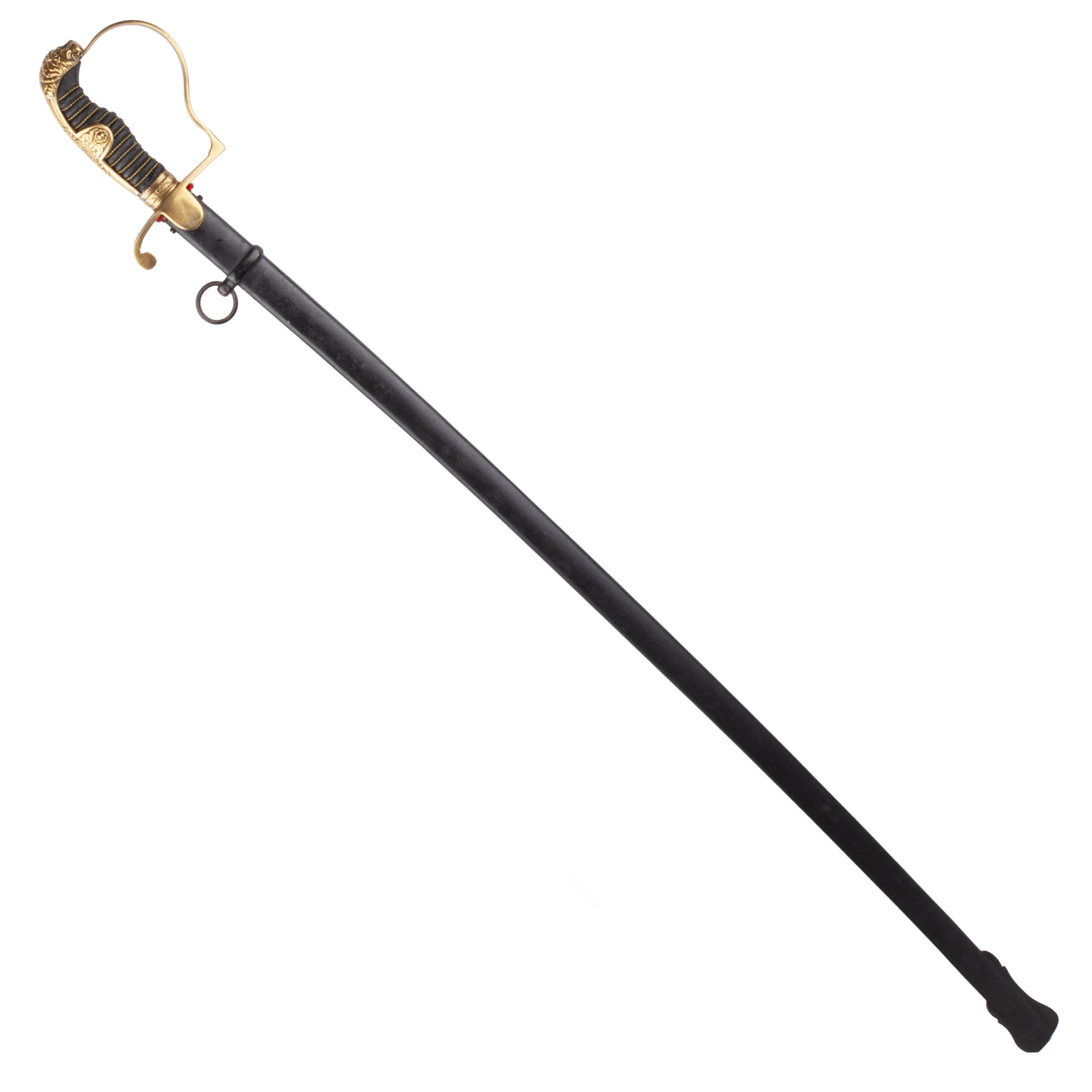
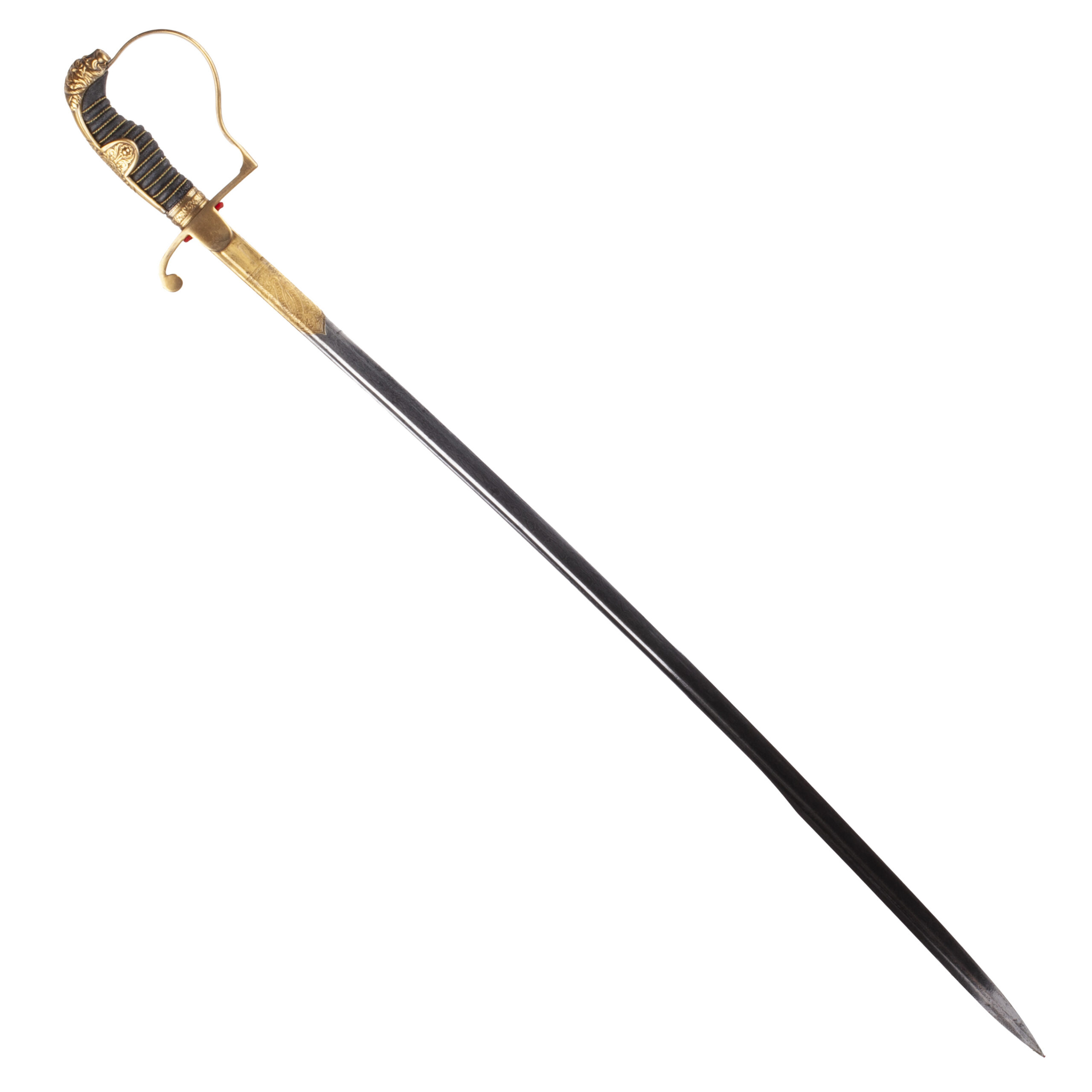
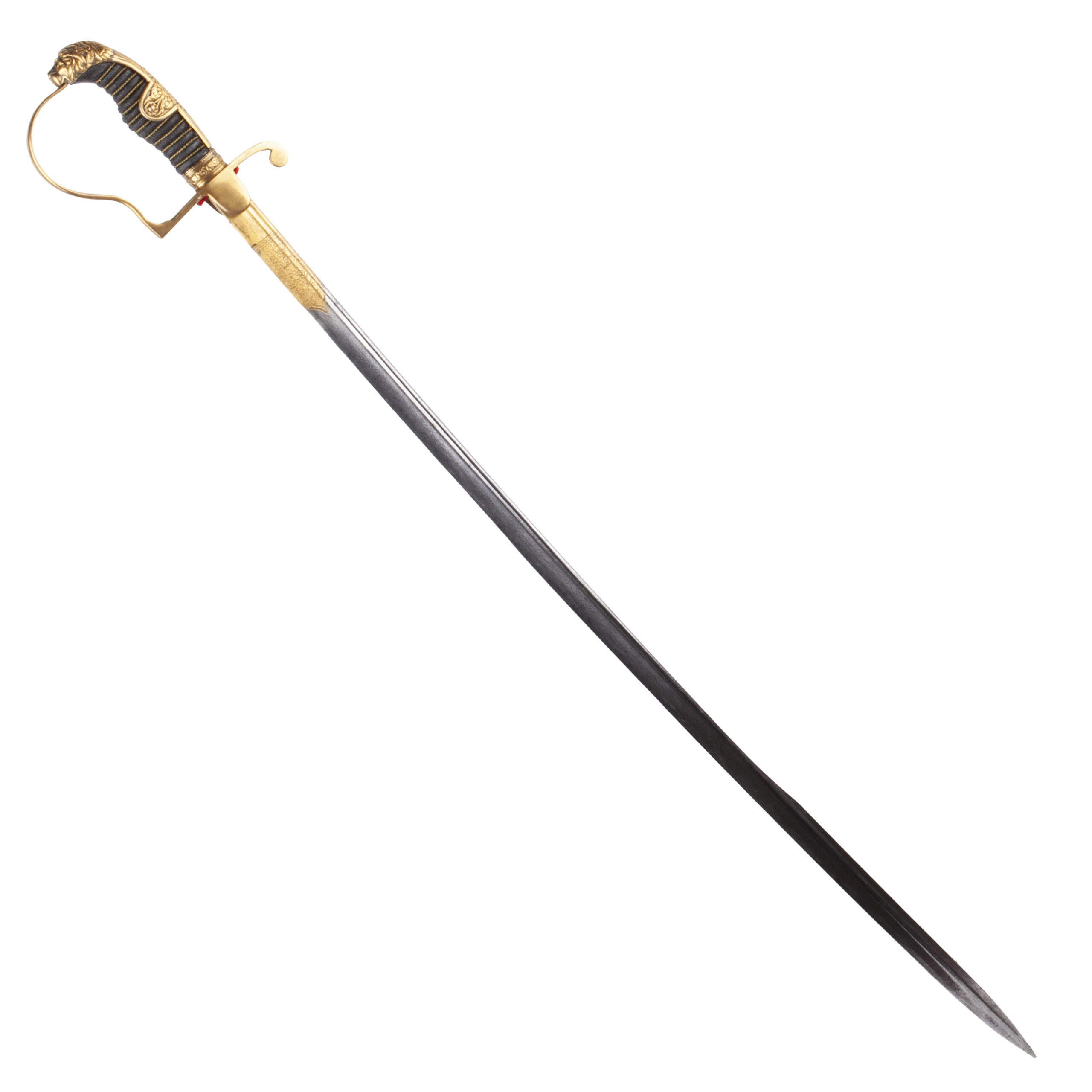
Imperial German Officer’s Lion Head Sabre with Damascus Steel Blade, circa 1880–1914
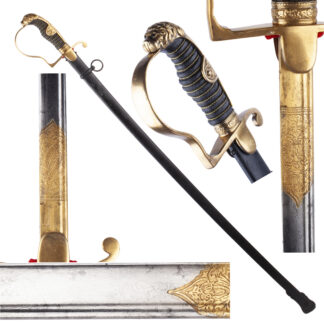
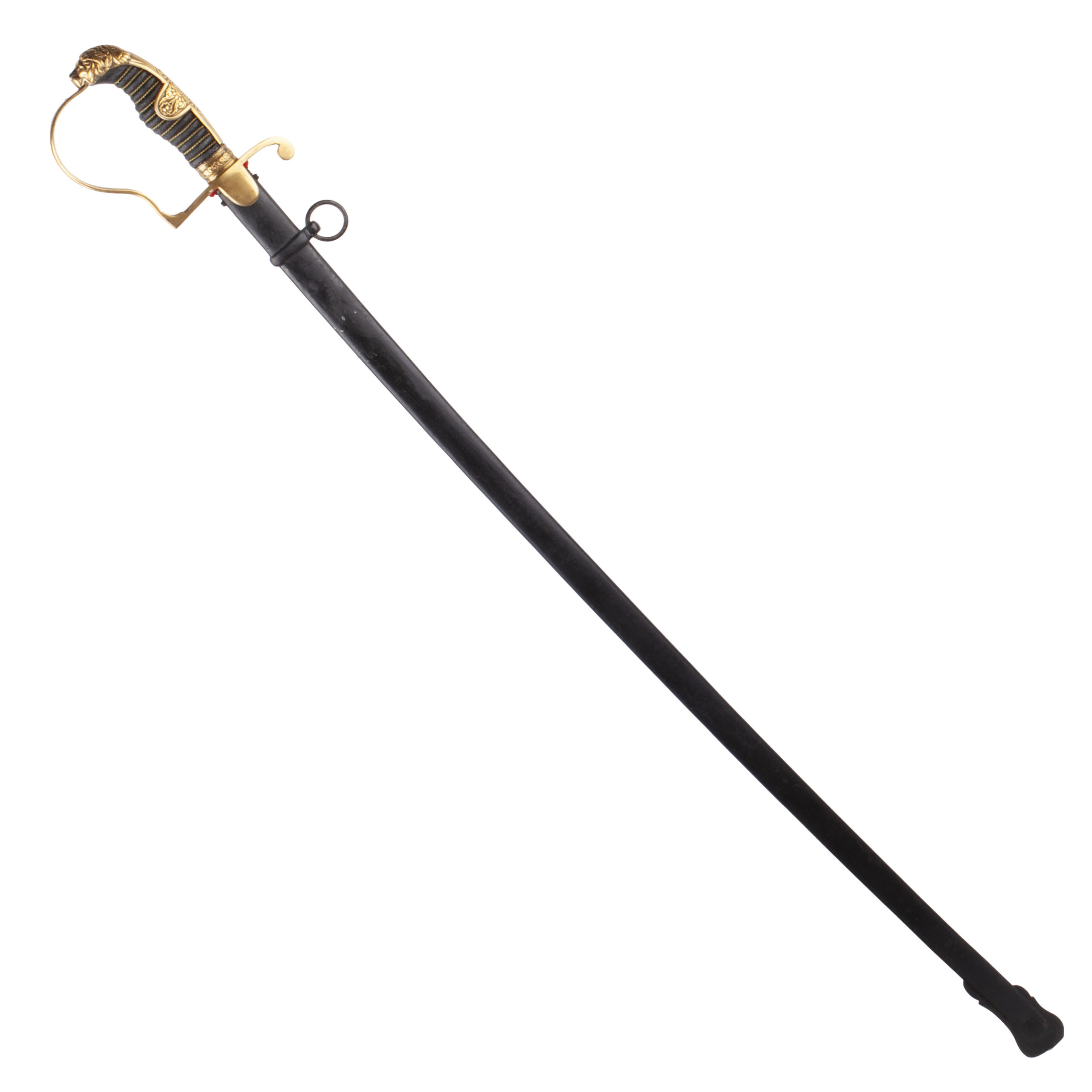
A finely decorated German officer’s sabre dating to the late 19th or early 20th century, distinguished by its patterned Damascus steel blade, ornate gilt-brass hilt and striking lion’s head pommel.
The sabre represents the decorative military sword-making tradition of the German Imperial period, when privately purchased officer’s weapons could be richly embellished with precious-looking finishes, ornamental fittings and specially selected blades.
DAMASCUS STEEL BLADE
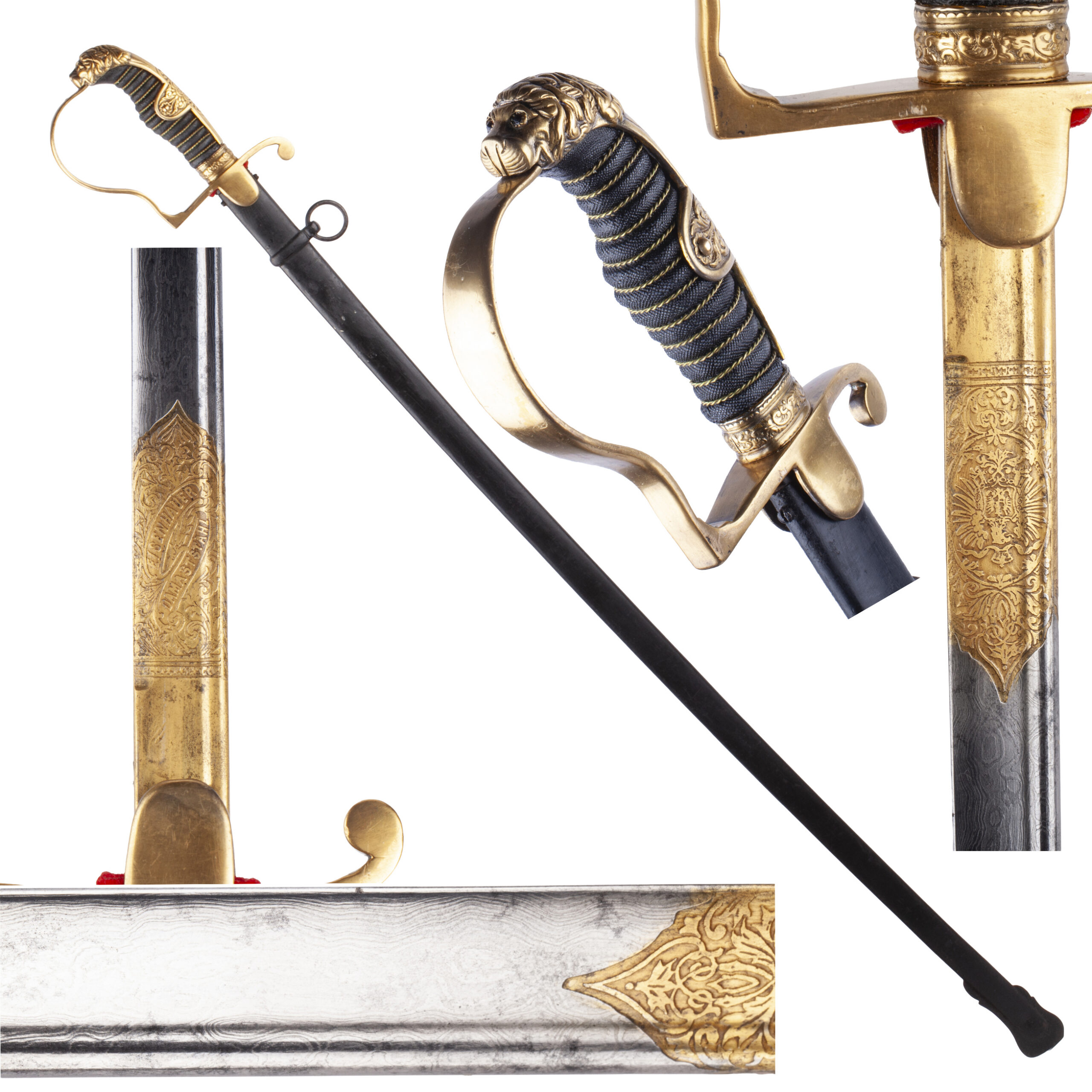
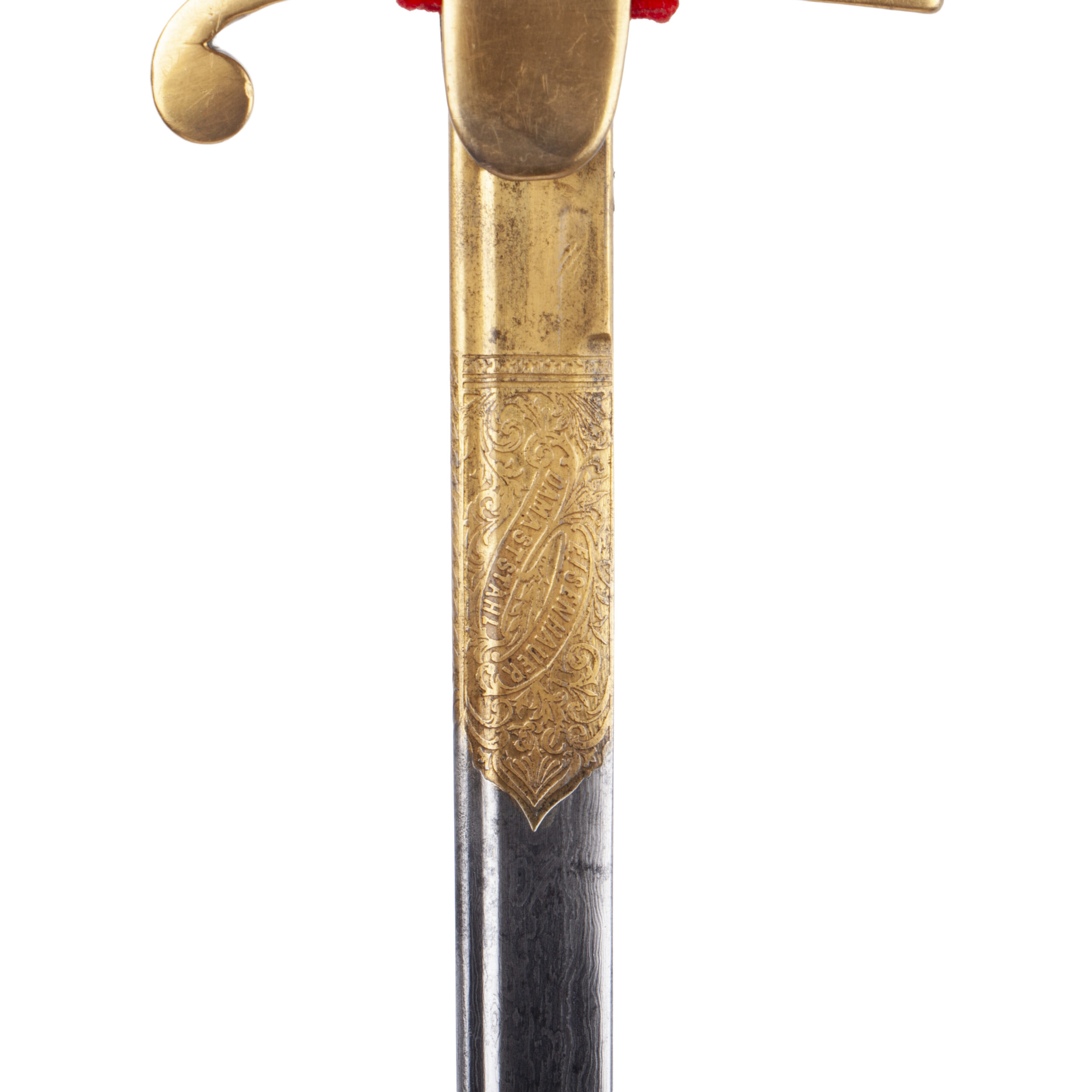
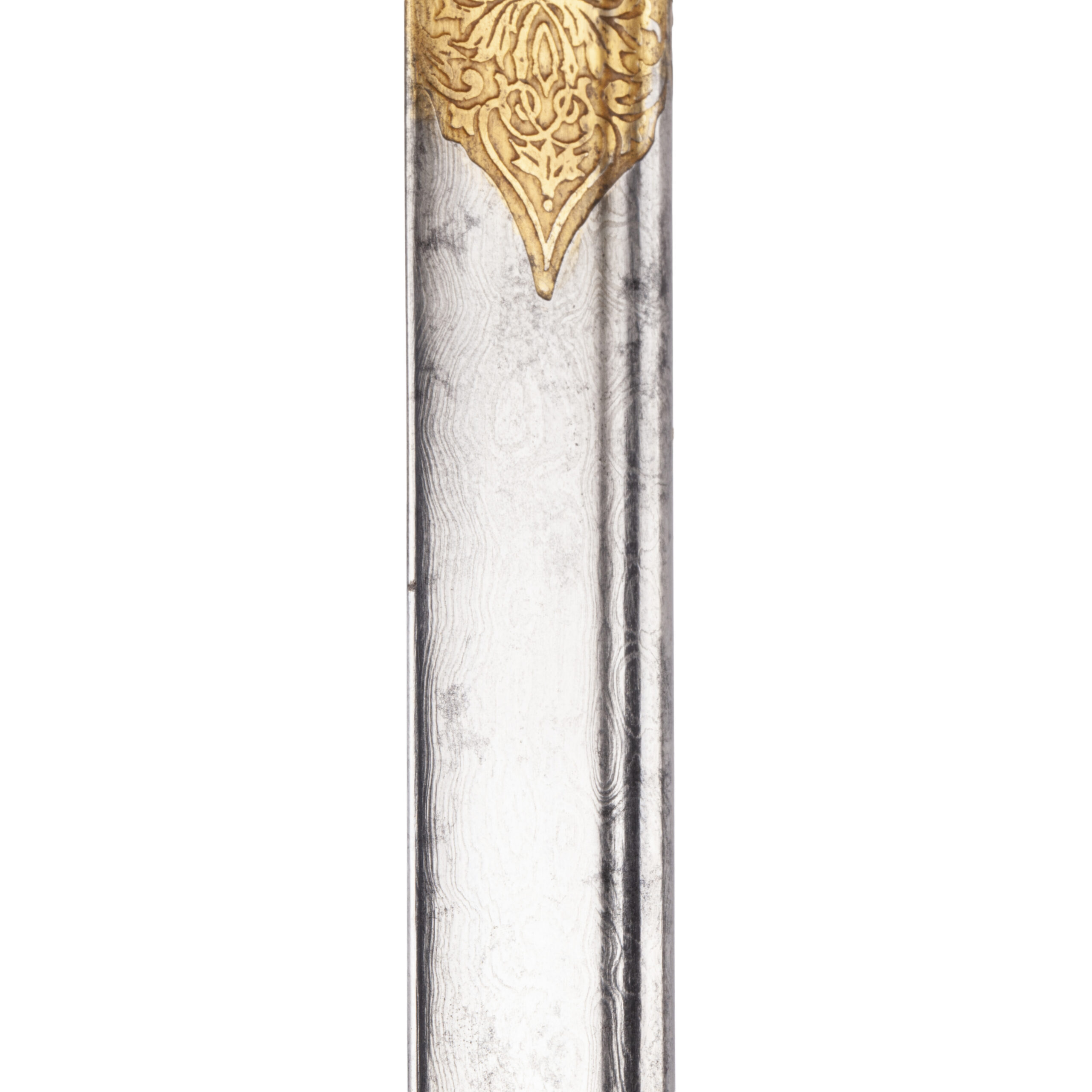
The slender steel blade displays a clearly visible flowing and wavy pattern associated with Damascus steel.
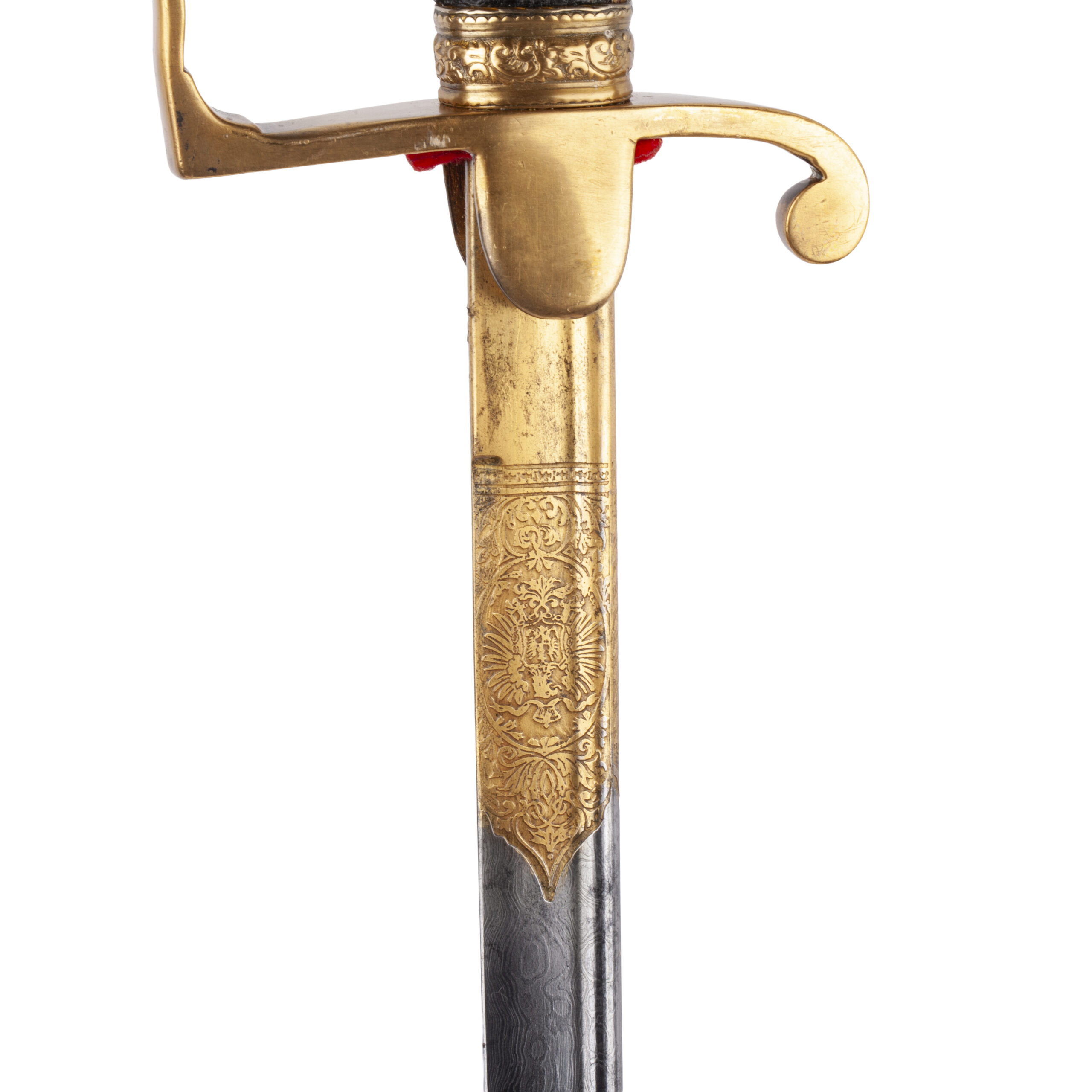
The forte is richly ornamented with gilt-etched floral scrollwork and decorative panels. One side bears the German inscription “Eisenhauer Damaststahl”, while another decorated area displays a double-headed eagle surrounded by elaborate foliage.
“Eisenhauer” is a historical German blade-quality designation, while “Damaststahl” refers to Damascus steel. These inscriptions are found on other high-quality German officer’s sabres of the Imperial period.
The blade decoration is particularly attractive, combining the dark and light tones of patterned steel with the warm colour of gilded ornament.
The exact manufacturing technique and composition of the Damascus blade have not been independently tested.
LION’S HEAD HILT
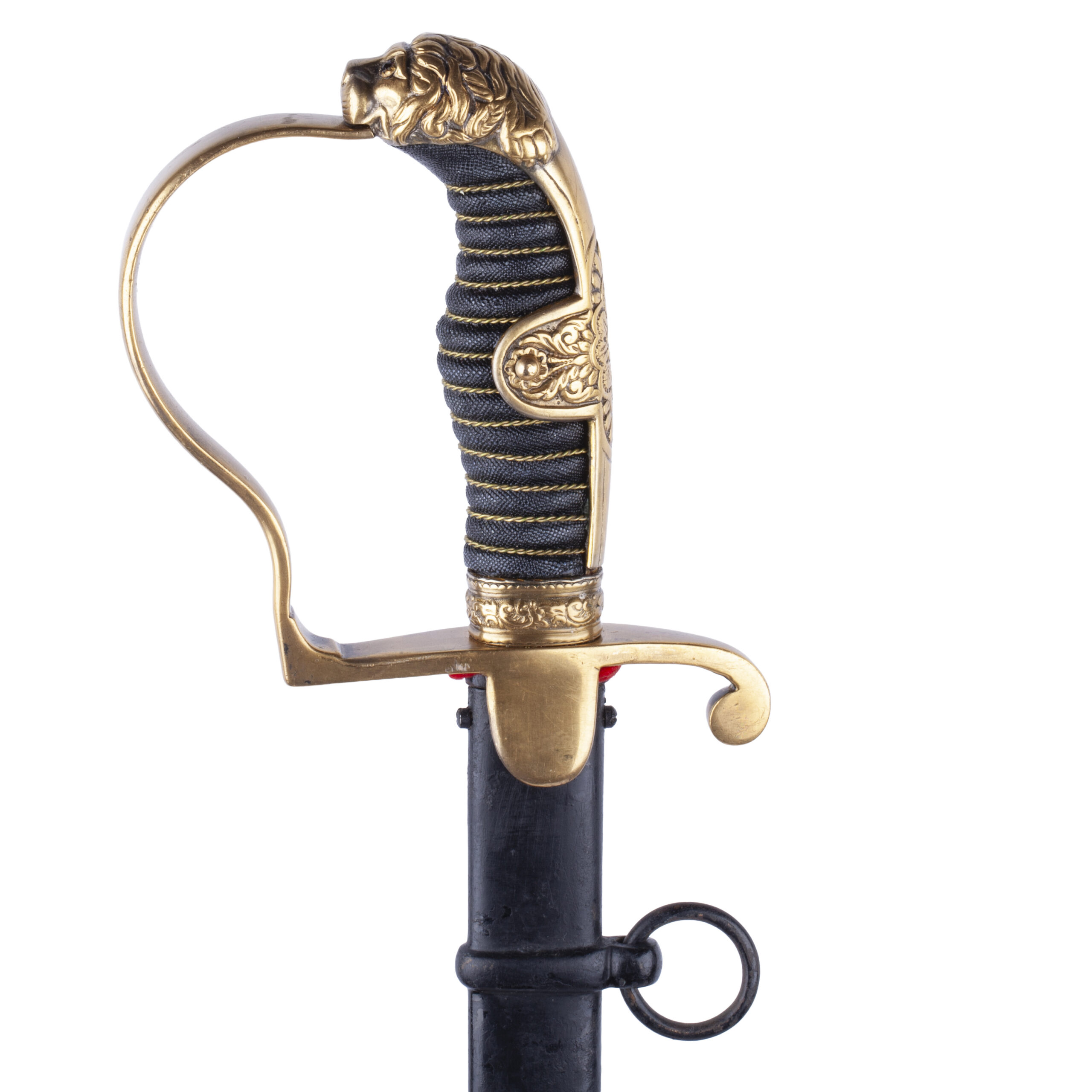
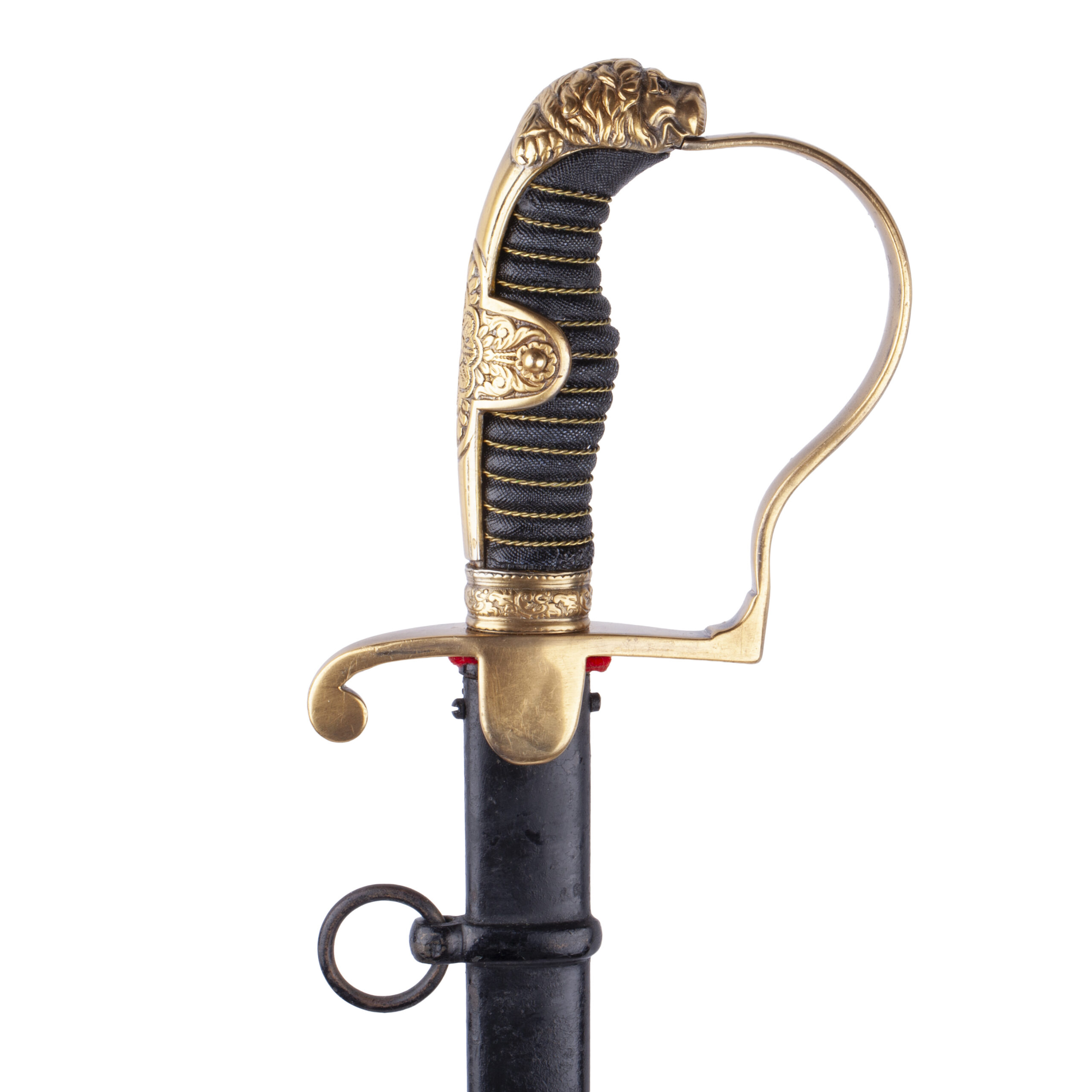
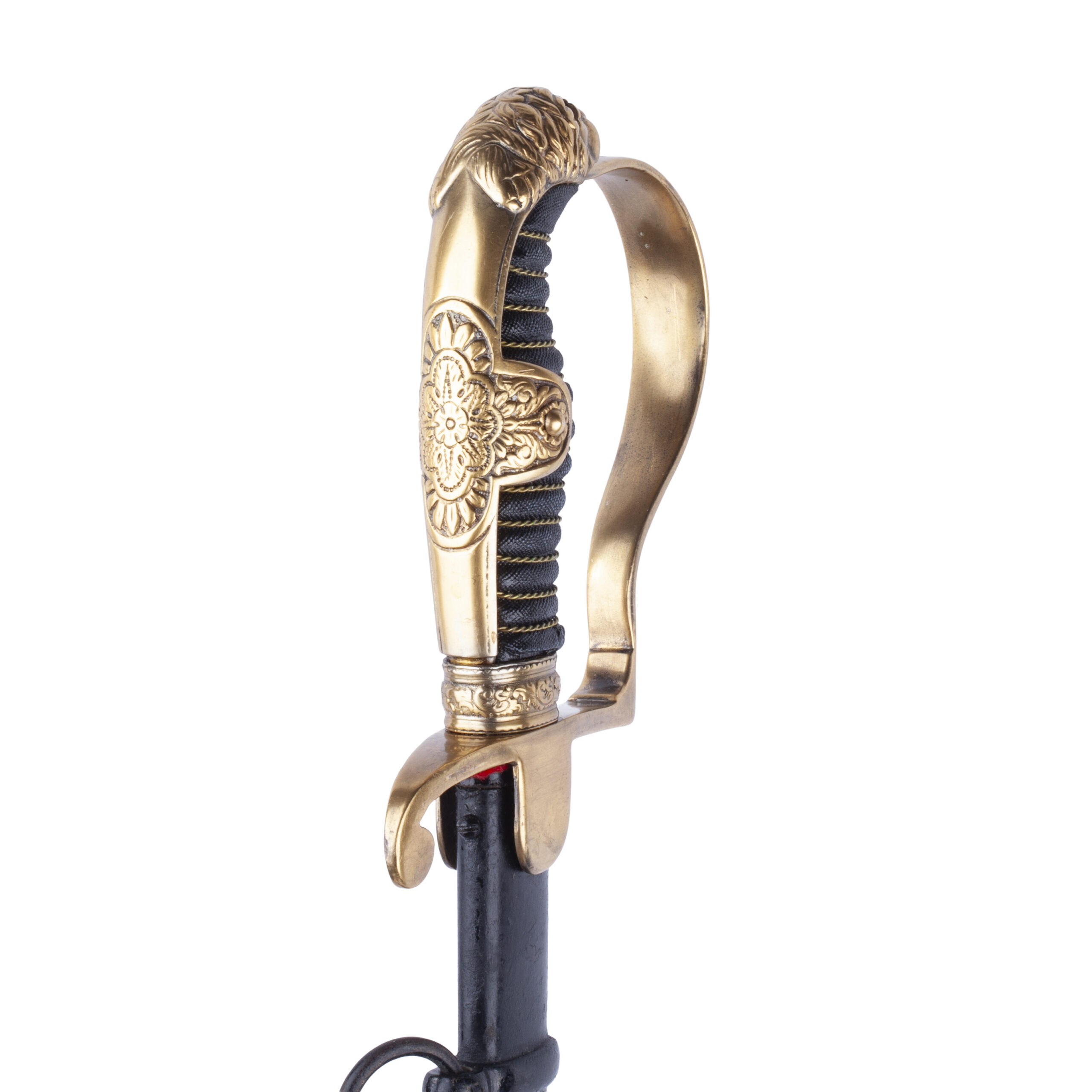
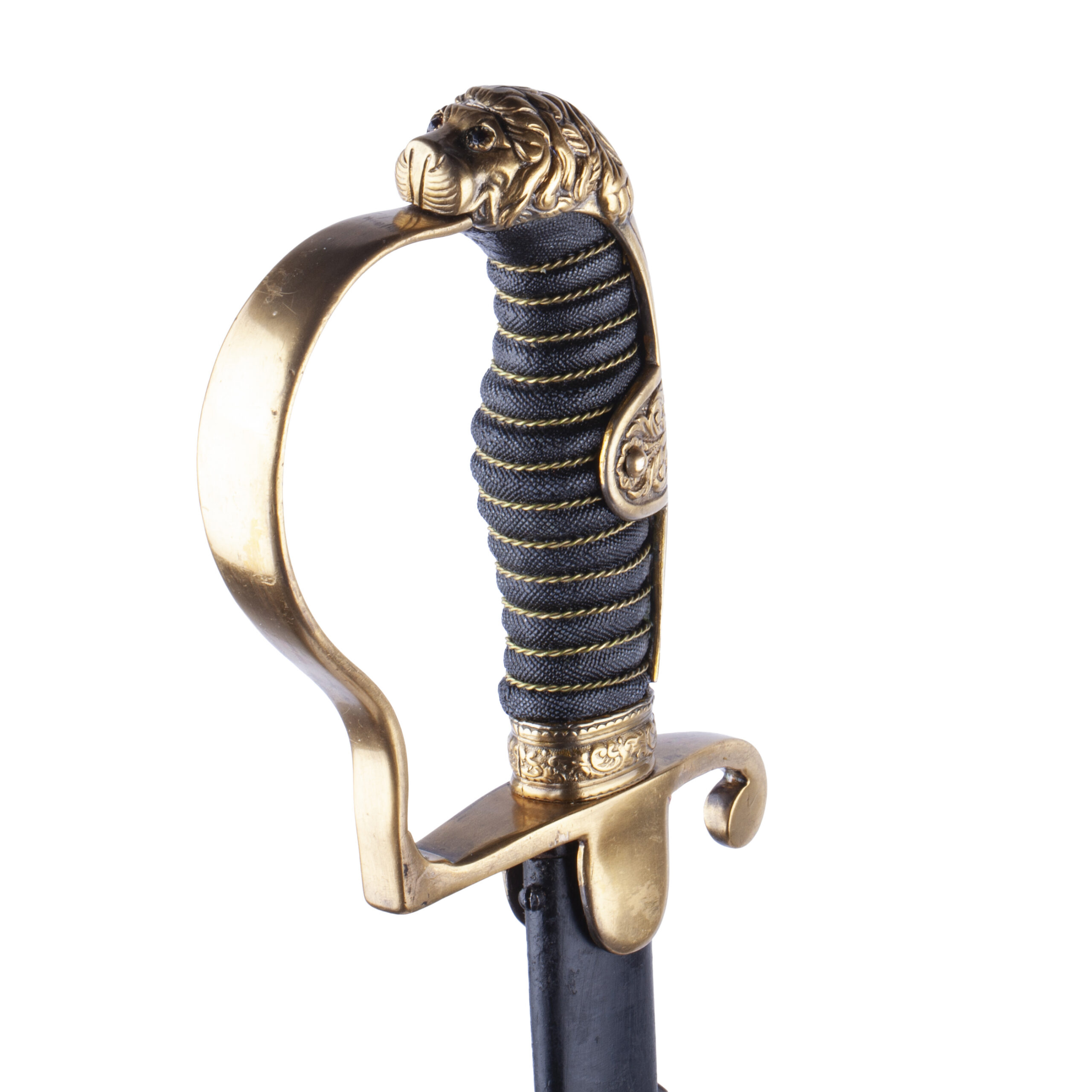
The ornate brass hilt is distinguished by a realistically modelled lion’s head pommel with carefully rendered mane, facial features and prominent eyes.
The dark grip is wrapped with twisted metal wire, creating an elegant contrasting pattern.
The backstrap extends from the lion’s head along the rear of the grip and is decorated with ornamental metalwork.
The curved knuckle guard has a flowing profile, while the opposite quillon terminates in an outward-curving scroll.
Decorative floral bands surround the upper and lower portions of the grip.
SCABBARD
The sabre is accompanied by a black metal scabbard with a single suspension ring near the throat.
The scabbard has a narrow, tapering form with a shaped terminal.
HISTORICAL BACKGROUND
During the late 19th and early 20th centuries, German officers frequently carried privately purchased sabres that combined regulation military forms with individual decorative preferences.
Lion’s head hilts became a distinctive feature of many German military dress sabres.
The Solingen sword-making industry produced numerous examples with highly decorated Damascus blades, gilt etching and inscriptions such as “Eisenhauer” and “Damaststahl”.
Comparable examples are recorded in international auction catalogues, including a German cavalry officer’s presentation sabre by Weyersberg, Kirschbaum & Cie, dated 1905.
The present sabre follows this general decorative tradition. However, the precise manufacturer, military branch and original owner have not been established.
DETAILS
Origin: Germany, attributed
Period: Imperial German period, circa 1880–1914
Type: Officer’s sabre
Blade: Patterned Damascus steel
Blade decoration: Gilt etching, floral ornament and heraldic motifs
Inscription: Eisenhauer Damaststahl
Hilt: Brass with lion’s head pommel
Grip: Dark covering with twisted metal wire
Scabbard: Black metal, one suspension ring
DIMENSIONS
Overall length: 93 cm
Blade length: 74.5 cm
Blade width: 2 cm
CONDITION
Antique condition with signs of age and use.
The blade retains visible Damascus patterning and areas of its decorative gilding, with surface marks and signs of wear.
The brass hilt shows minor scratches and age-related wear. The grip wrapping remains present.
The black scabbard has surface wear, marks and areas of patina.
Please examine the photographs carefully, as they form an integral part of the description.
A decorative example of Imperial German military sword craftsmanship, particularly appealing for its lion’s head hilt, patterned blade and surviving gilt ornament.