Description
Japanese Articulated Bronze Grasshopper Jizai Okimono, Late Meiji Period
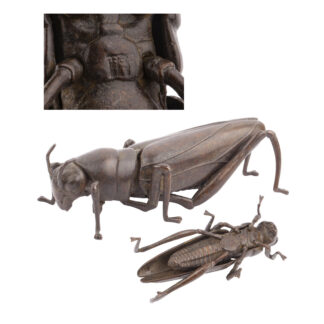
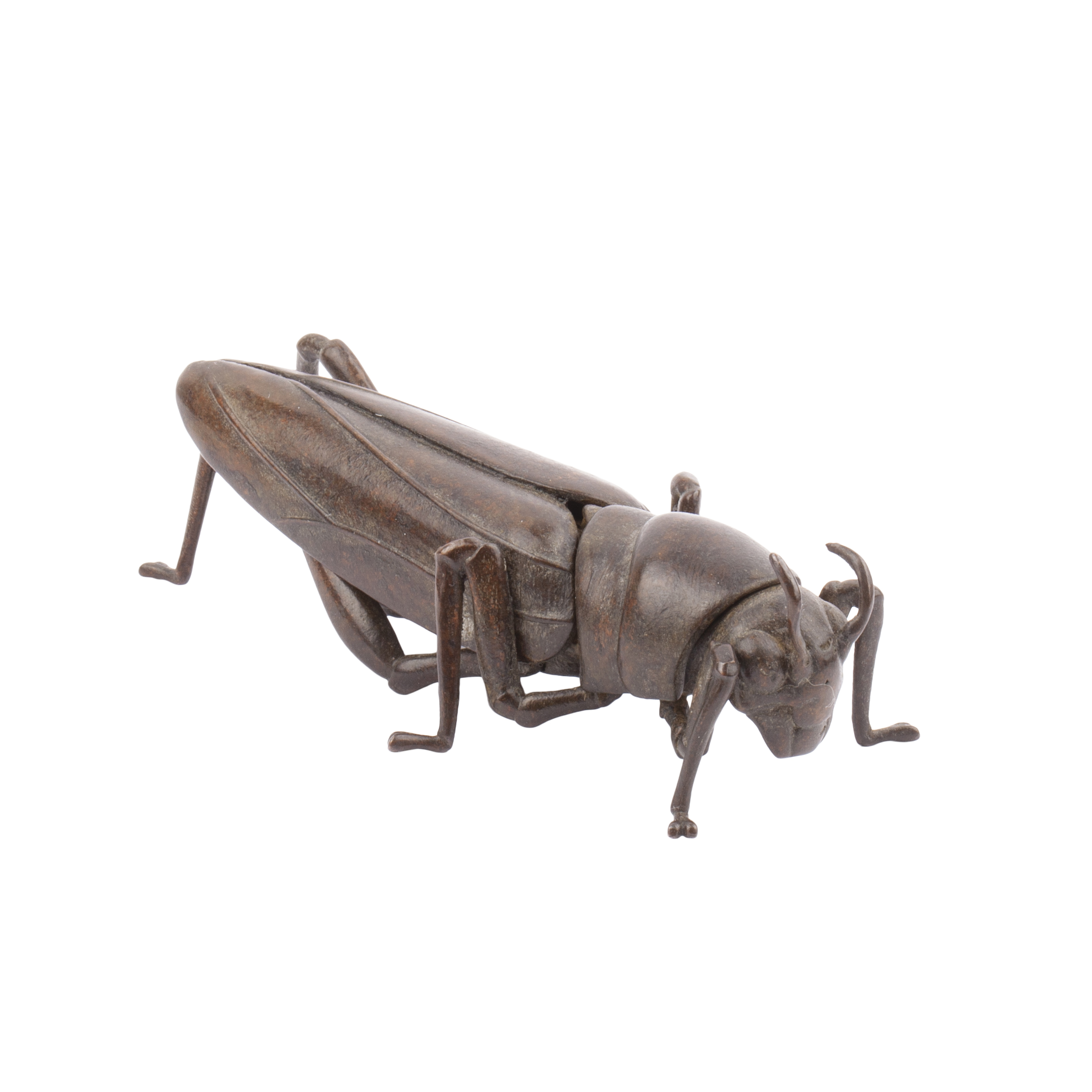
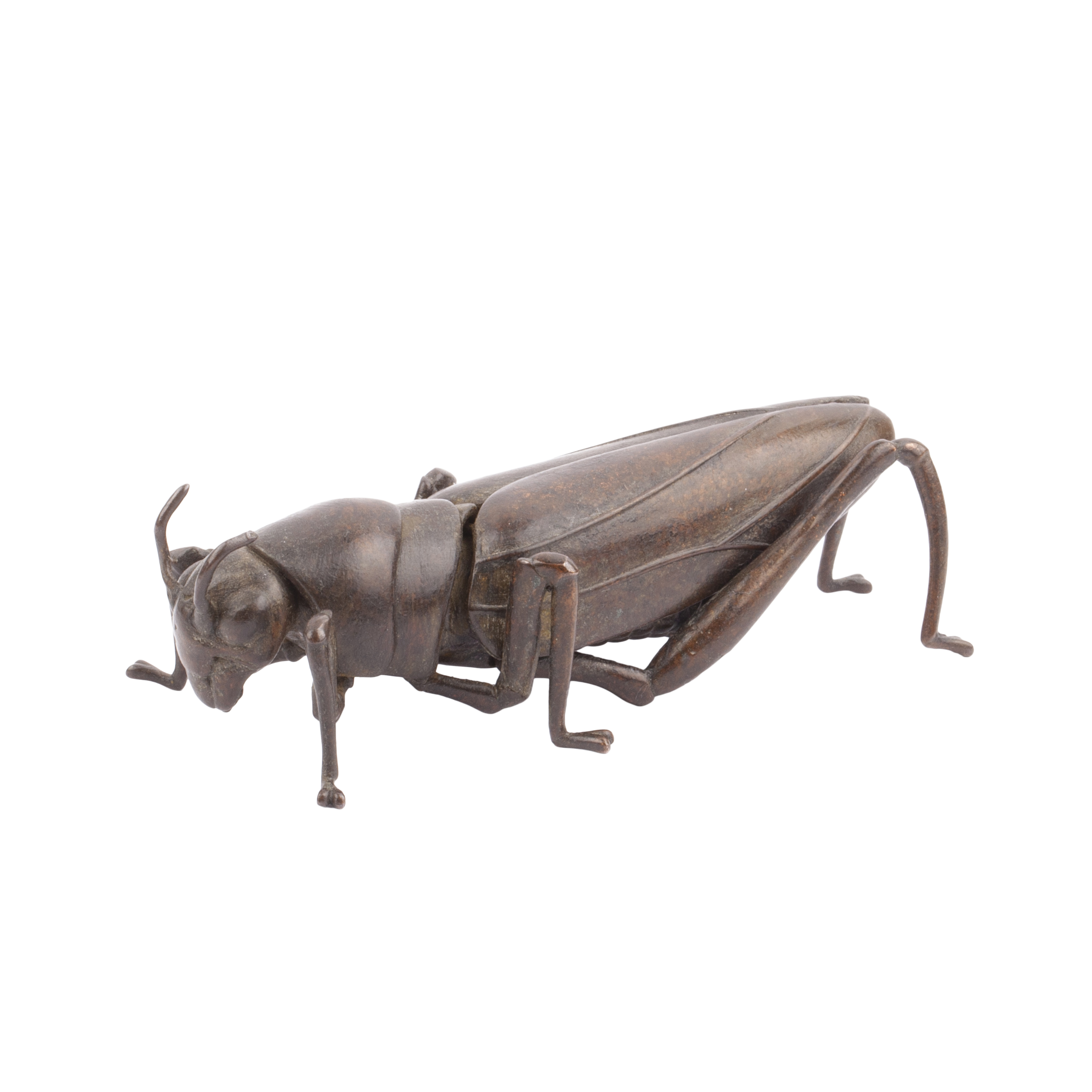
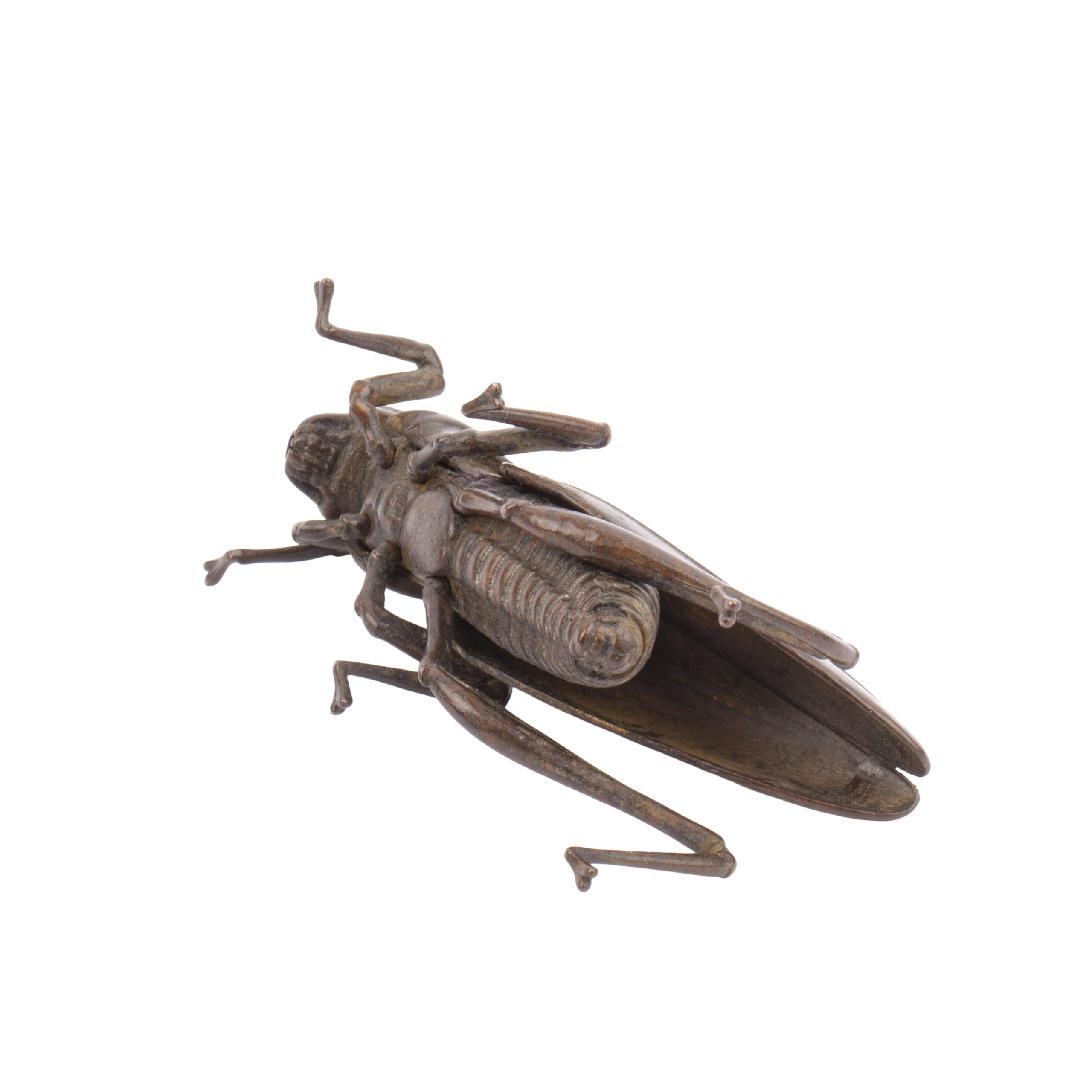
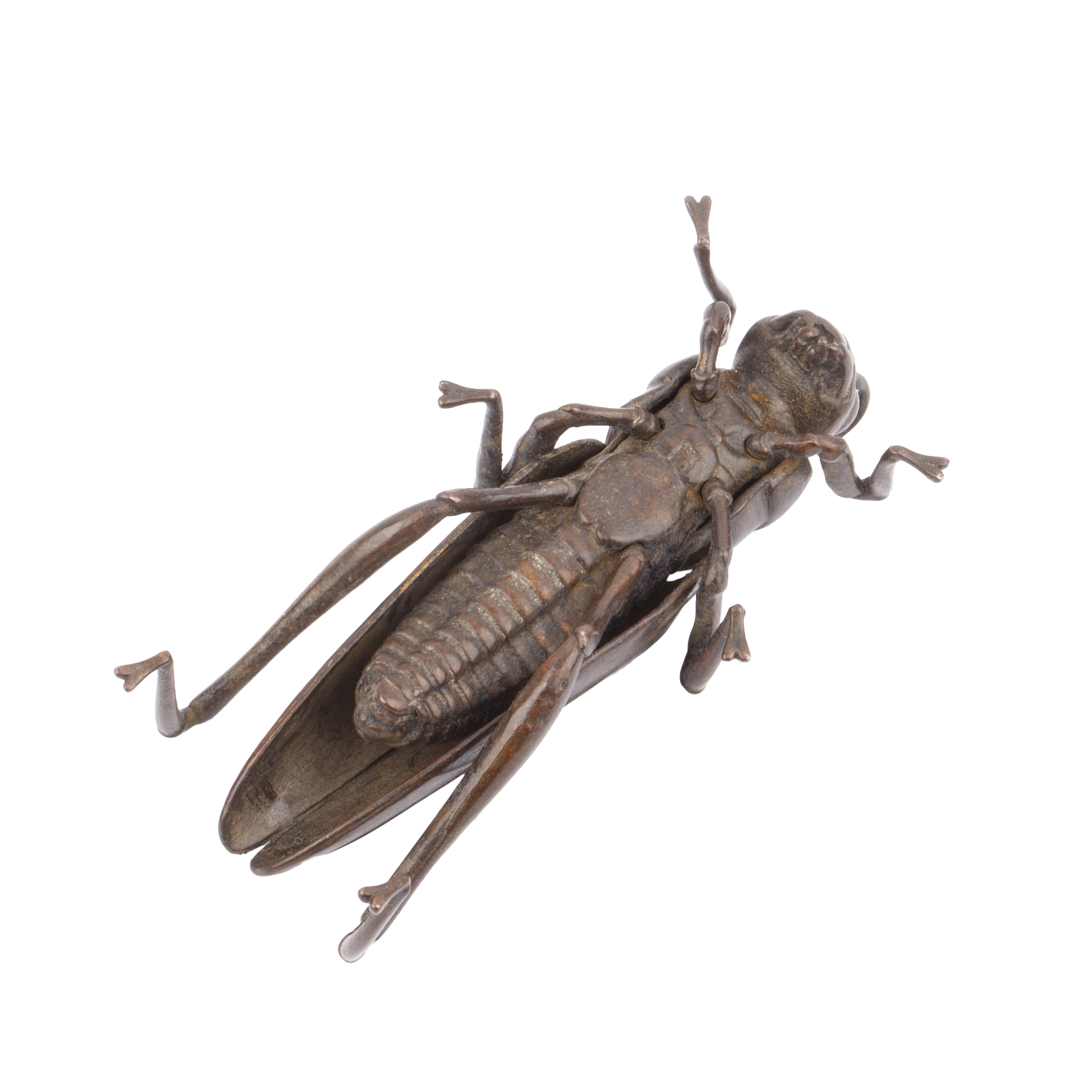
An impressive example of Japanese decorative metalwork in the form of a realistically modelled grasshopper with articulated legs and wings, known in Japan as Jizai Okimono (自在置物).
The sculpture is meticulously constructed from multiple metal components, allowing the legs and wings to be moved and the figure to be arranged in different positions.
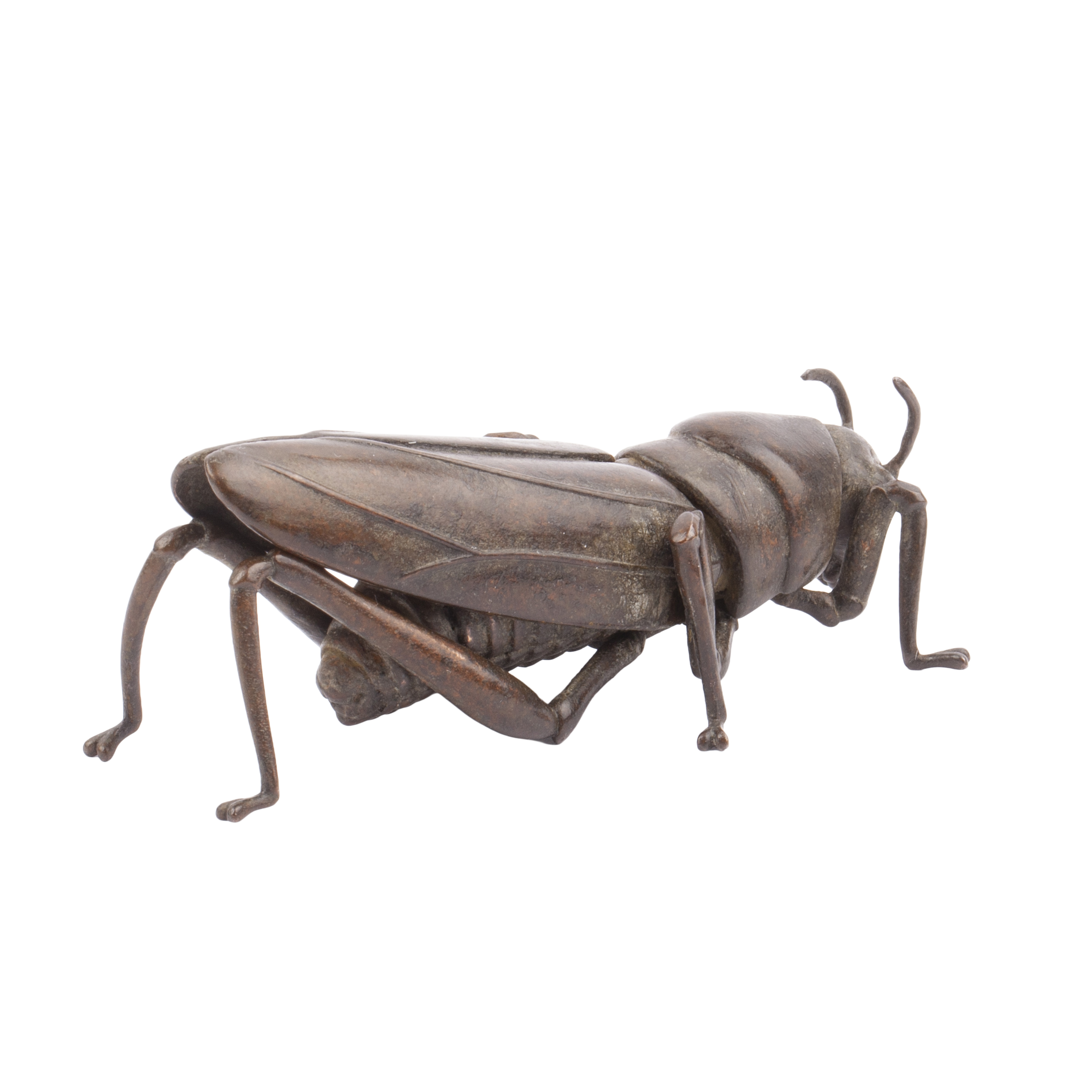
The insect is depicted with an elongated body, a carefully modelled head, prominent eyes, curved antennae and powerful hind legs.
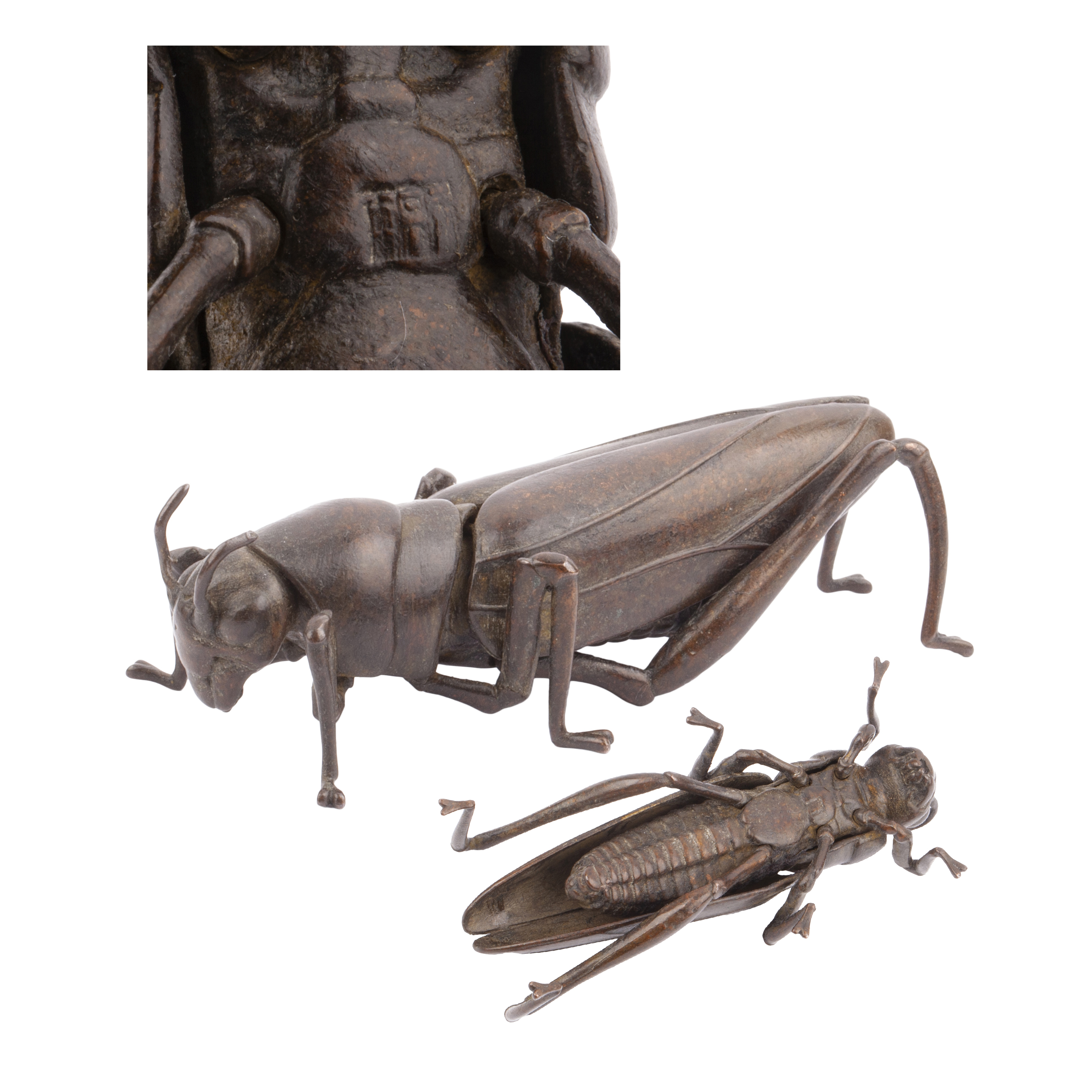
The folded wings have finely defined raised veins, while the underside reveals a segmented abdomen and carefully constructed joints.
The naturalistic treatment of the body, together with the subtle variations in the brown patinated surface, gives the sculpture a remarkably lifelike appearance.
MOVABLE CONSTRUCTION
The legs and wings are articulated, demonstrating the technical skill required to produce such miniature sculptures.
The separate components are carefully joined to the body, allowing movement while preserving the anatomical appearance of the insect.
The construction reflects the traditional Japanese approach to combining mechanical ingenuity with decorative metalwork.
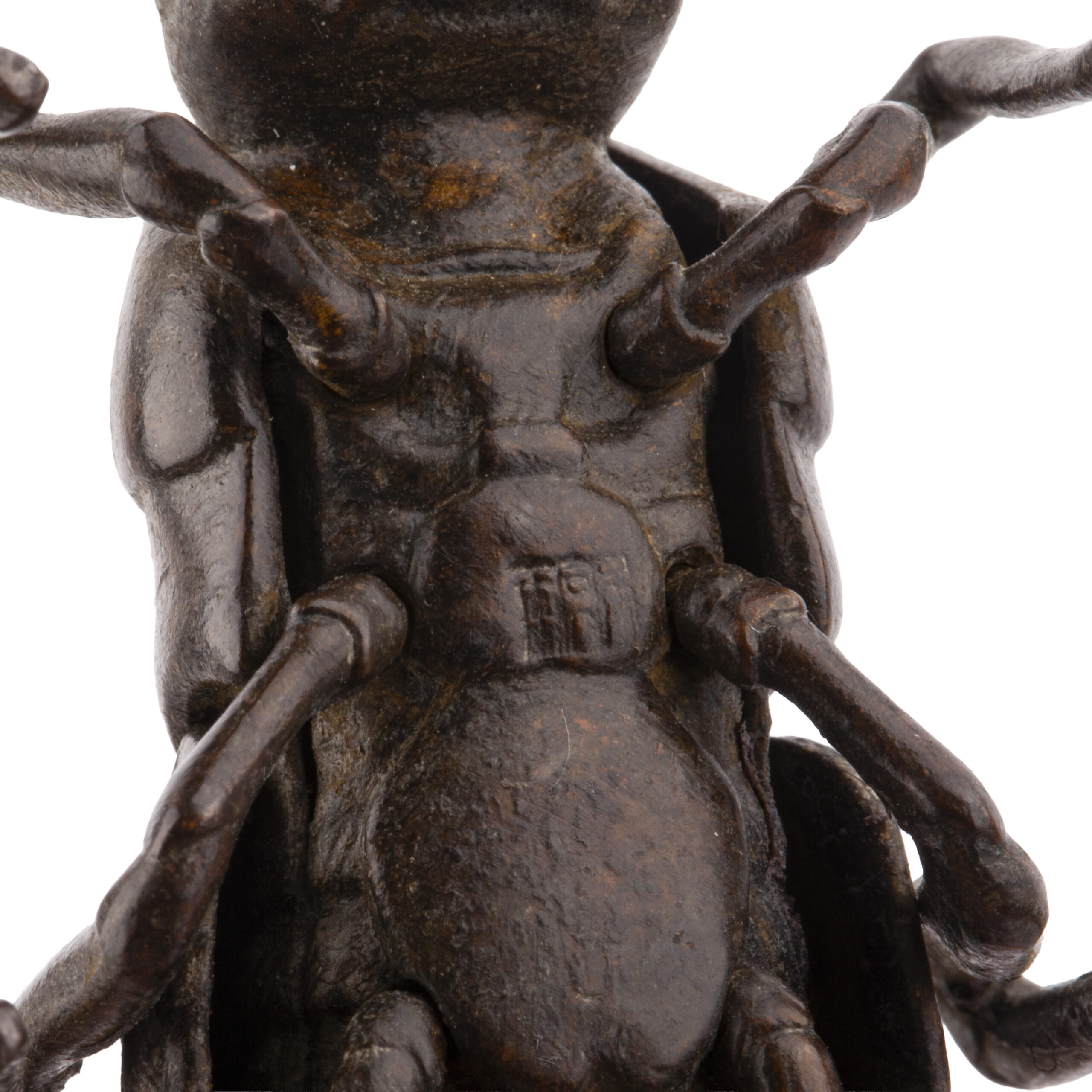
MAKER’S MARK
A small raised mark is visible on the underside of the body.
The exact characters have not been conclusively deciphered, and the identity of the maker remains unconfirmed.
The mark and general construction invite comparison with Japanese articulated metalwork produced during the Meiji period, but no attribution to a particular artist or workshop is claimed.
HISTORICAL BACKGROUND
Jizai Okimono are articulated metal sculptures of animals and insects developed by Japanese metalworkers.
The tradition has historical connections with the skills of Japanese armour makers, who specialised in joining numerous metal components while allowing flexibility and movement.
During the Meiji period (1868–1912), this form of decorative metalwork gained international recognition and became increasingly popular among collectors.
Artisans created remarkably lifelike models of dragons, snakes, fish, insects and other creatures, combining detailed observation of nature with sophisticated metalworking techniques.
Grasshoppers were particularly suitable subjects because of their elongated bodies, jointed legs and overlapping wings.
Comparable Japanese articulated grasshoppers from the late 19th and early 20th centuries are documented in museum collections and international auction catalogues.
DATE AND MATERIAL
Japan, probably late Meiji to early Taisho period, approximately 1890–1920.
The sculpture appears to be made from patinated bronze or a related copper alloy. The exact alloy composition has not been tested.
DIMENSIONS
Length: 8.5 cm
Width: 4 cm
Height: 2.5 cm
CONDITION
Good antique appearance, with a naturally aged brown patina, minor surface wear and traces of handling.
The legs and wings are movable. Their range of movement has not been mechanically assessed.
Please examine the photographs carefully for the exact condition of the individual parts.
An attractive example of Japanese Jizai Okimono craftsmanship, combining detailed naturalistic modelling with an ingenious articulated construction.