Description
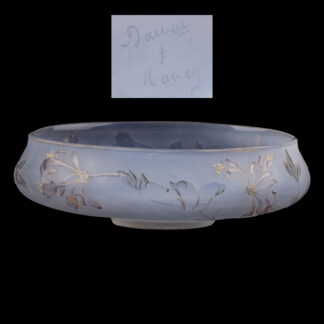
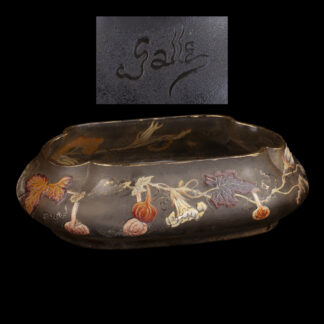
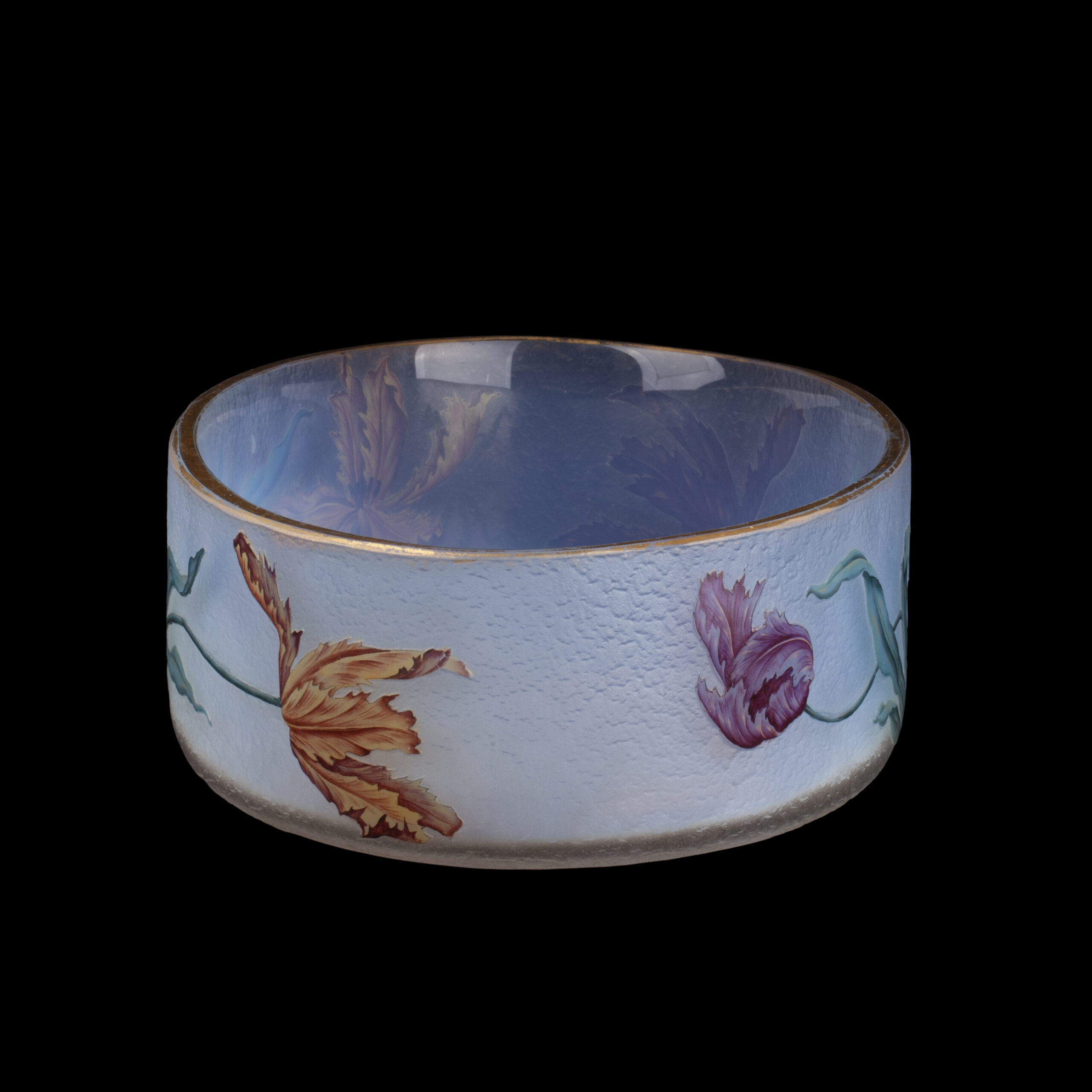
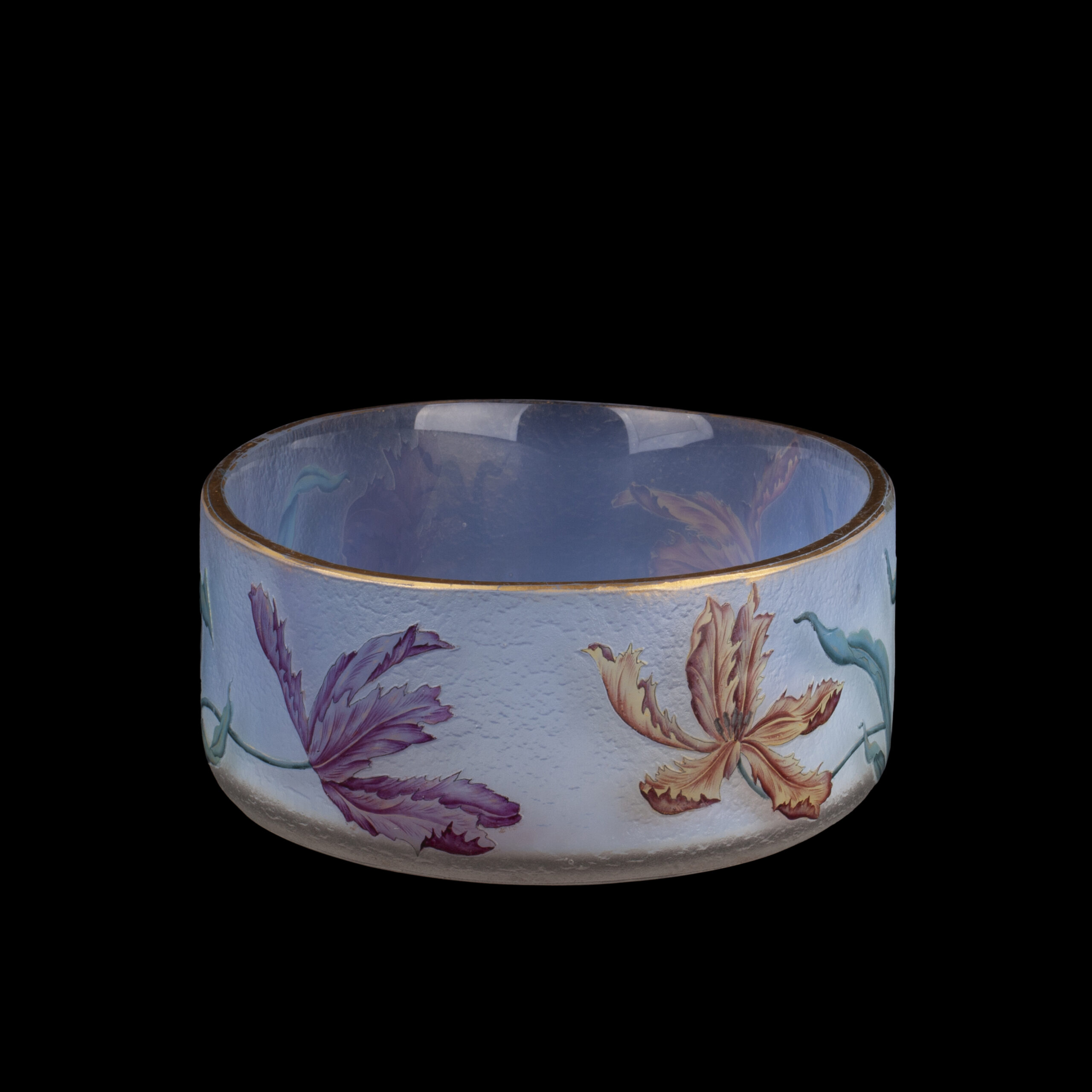
An exceptional and unusually large oval Art Nouveau glass fruit bowl by the celebrated French glassworks Daum Nancy, circa 1900–1910.
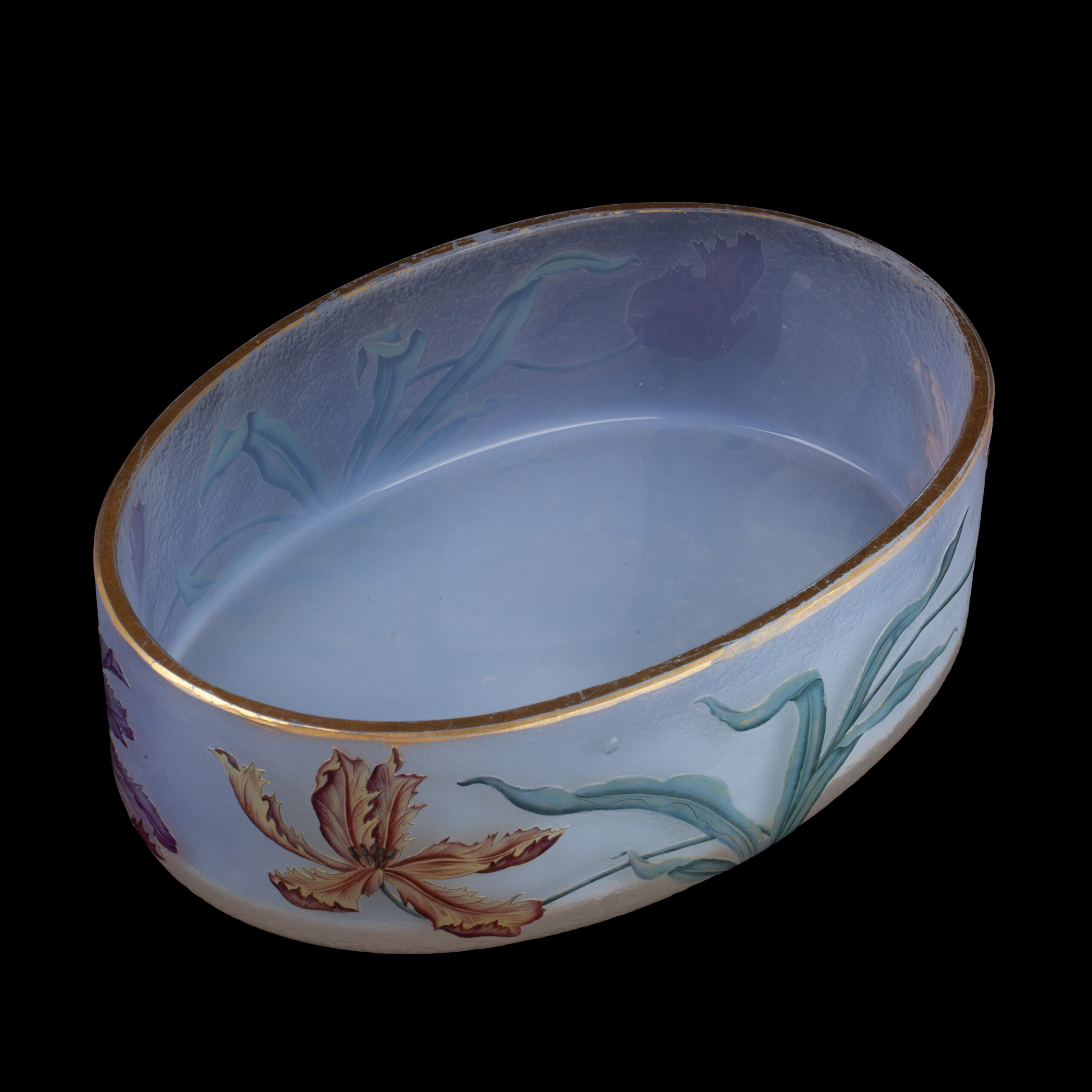
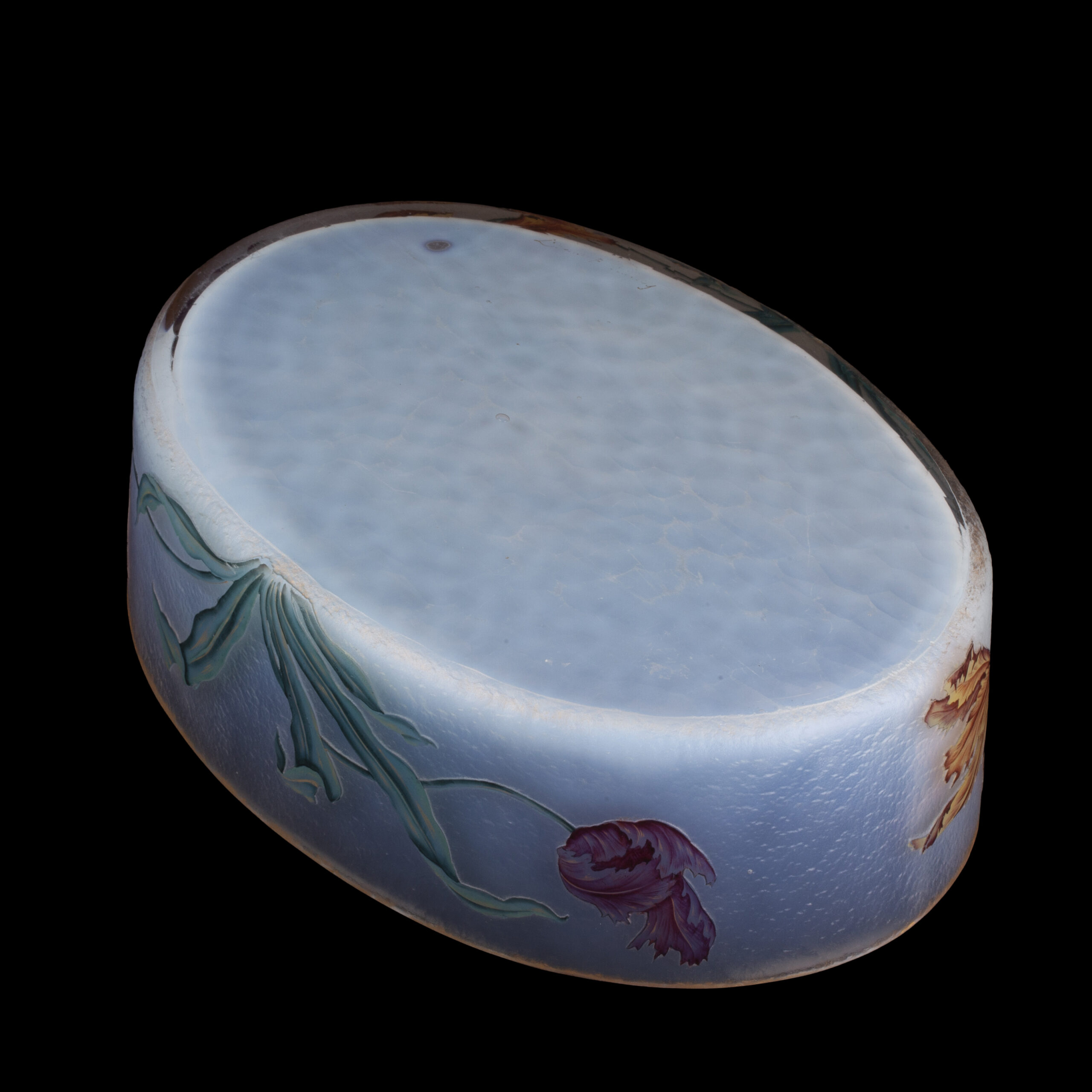
The bowl is of elegant, elongated oval form, executed in thick, pale blue glass with a finely textured, acid-frosted exterior and a smoother, softly translucent interior. The substantial weight and refined execution give the piece an impressive sculptural presence.
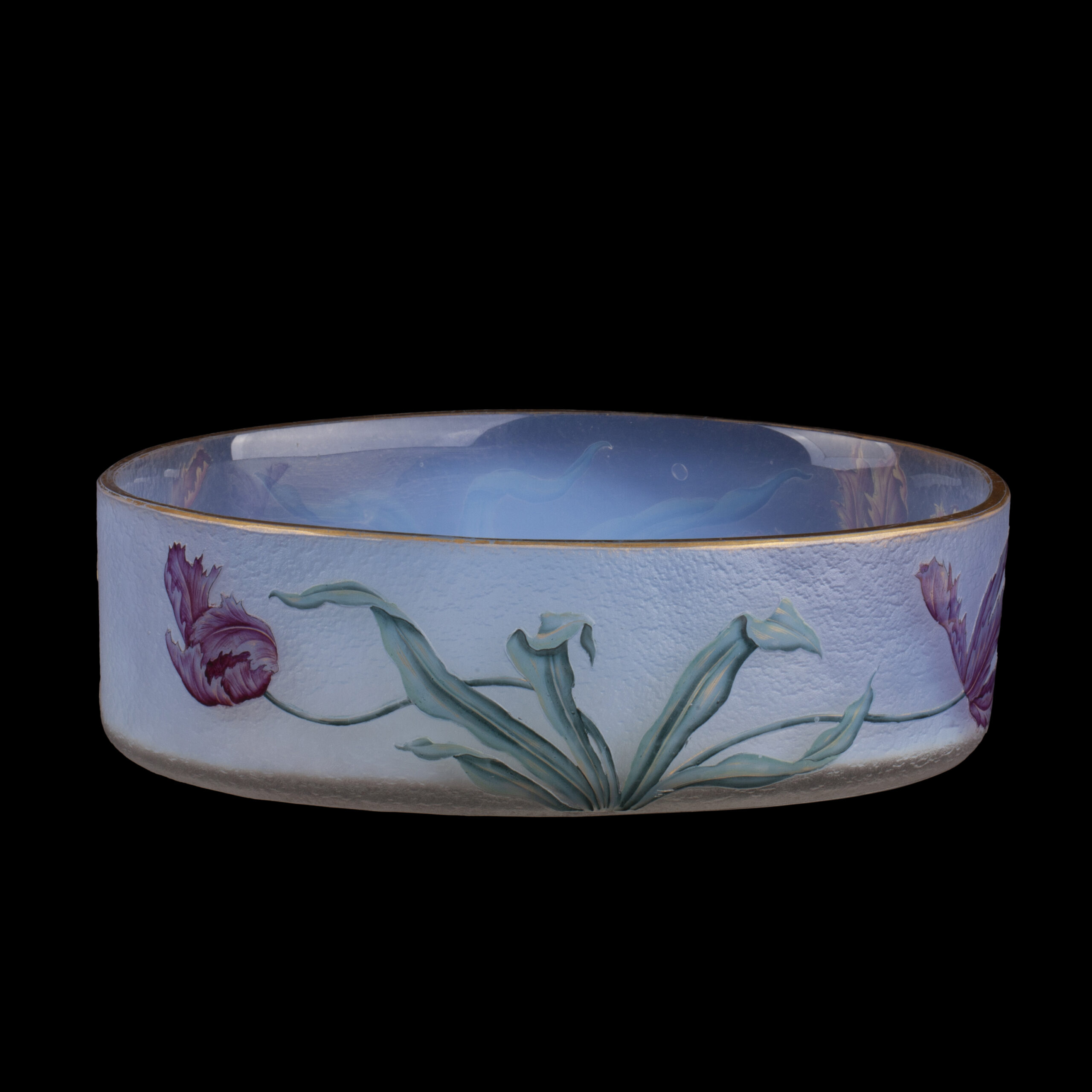
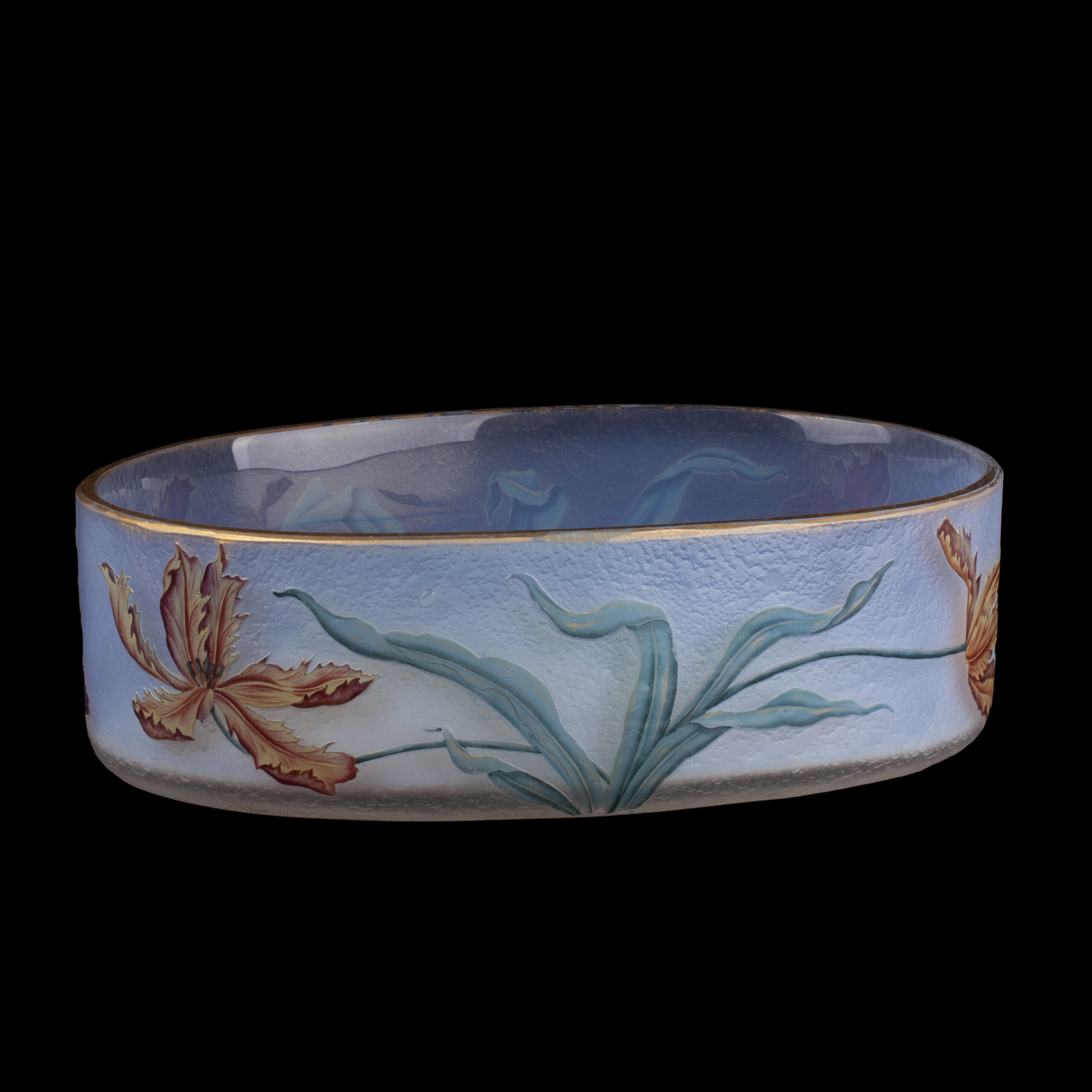
The exterior is decorated with an elaborate naturalistic composition of tulips, individually rendered in several colours and stages of flowering. One side displays dramatic violet and purple tulips, while the opposite sections feature flowers in soft rose, amber, copper-red and golden-yellow tones. Their long, flowing stems and gracefully curling turquoise-green leaves extend around the body of the bowl, creating a continuous decorative composition.
The flower petals are delicately shaded to emphasise their natural forms, while the foliage introduces a striking contrast against the cool blue background. The decoration combines finely detailed hand-painting with the subtle relief and texture of the glass surface.
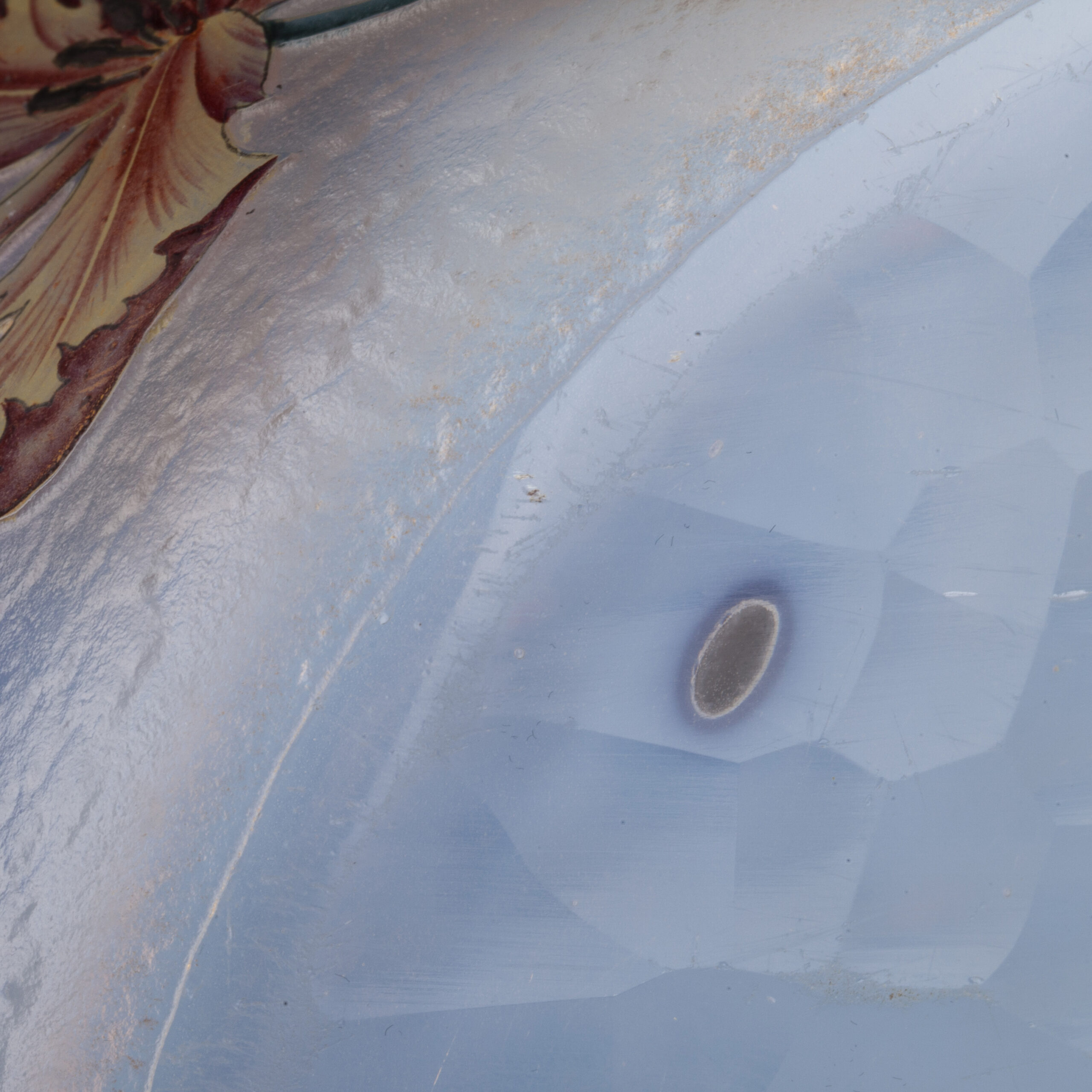
A narrow gilded band follows the upper rim, providing a refined finishing touch and enhancing the contrast between the blue glass and the warm floral colours.
The interior retains the delicate blue tint of the glass, allowing the exterior decoration to remain faintly visible through the translucent surface.
Particularly noteworthy is the carefully considered arrangement of the flowers, with different tulips appearing on opposite sides of the vessel. The composition changes according to the viewing angle, giving the bowl the character of an independent decorative artwork rather than an ordinary functional table vessel.
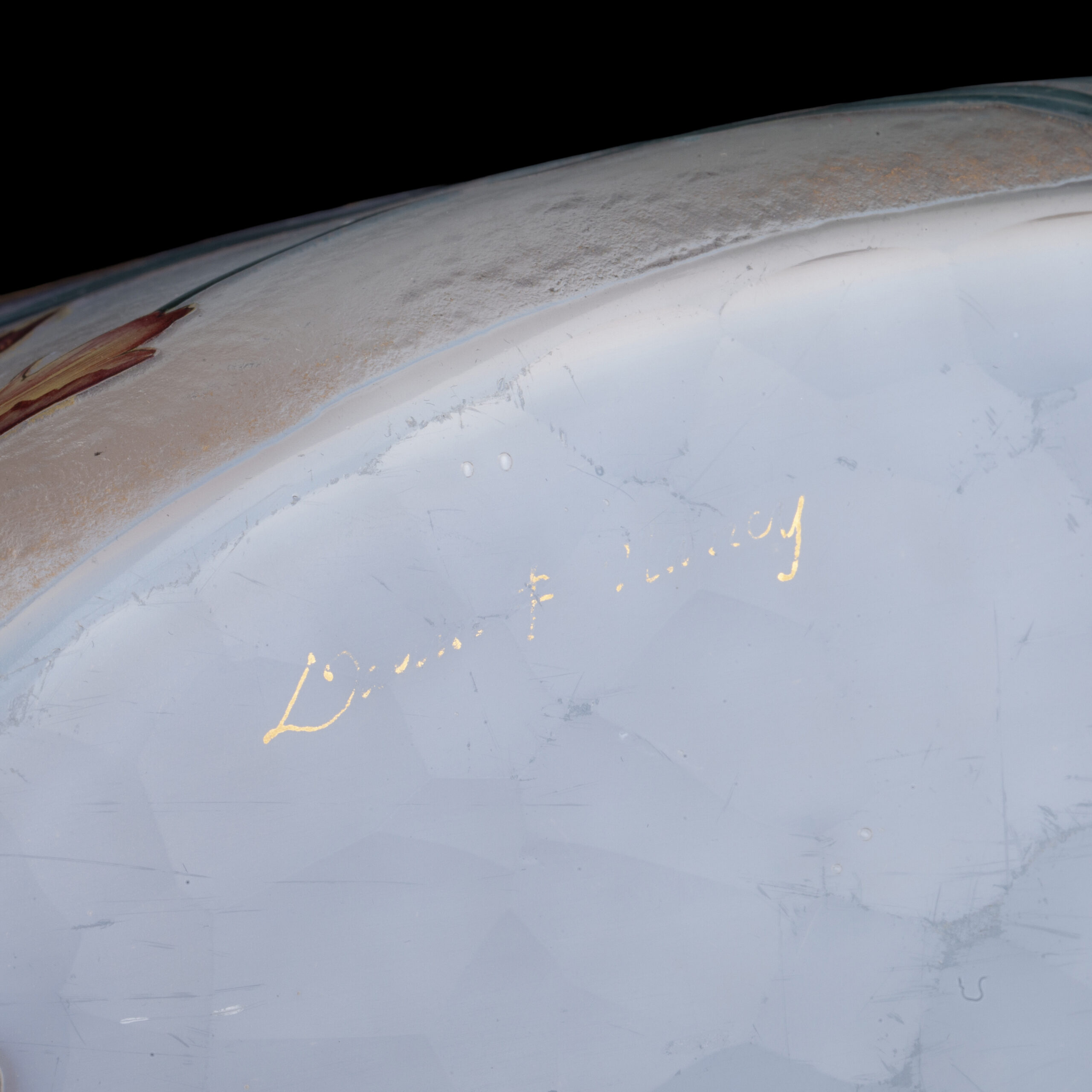
The underside retains the remains of a gilt Daum Nancy signature, consistent with the attribution to the renowned French glassworks.
Historical background:
The Daum glassworks was established in Nancy, France, in 1878 by Jean Daum. Under the direction of his sons Auguste Daum (1853–1909) and Antonin Daum (1864–1930), the firm became one of the most important representatives of French Art Nouveau glassmaking.
Around 1891, Antonin Daum established an artistic department dedicated to the production of innovative decorative glass. The factory developed sophisticated combinations of acid etching, coloured enamelling, layered glass, wheel engraving and naturalistic botanical decoration.
Daum became closely associated with the École de Nancy, the influential artistic movement that transformed nature, especially flowers and plants, into a principal source of inspiration for decorative art.
The artistic achievements of the manufactory were recognised internationally when Daum received the Grand Prix at the Paris Exposition Universelle of 1900.
Museum collections:
Important examples of Daum glass are preserved in major museum collections.
The Musée des Beaux-Arts de Nancy houses an exceptional reference collection of more than 900 Daum glass objects, documenting the development of the manufactory from its origins in 1878 through the Art Nouveau and Art Deco periods.
The Metropolitan Museum of Art in New York holds a documented Art Nouveau glass bowl designed by Louis Majorelle and Daum Frères, circa 1910, museum accession number 1973.36.
These museum holdings illustrate the recognised artistic and historical significance of Daum’s glass production. They are contextual references and are not presented as identical examples of the present bowl.
With its generous dimensions, substantial weight, unusual oval form, multi-coloured tulip decoration and partially preserved original signature, the present piece represents a distinguished, museum-quality example of Daum Nancy’s artistic glass production during the height of the Art Nouveau movement.
Manufacturer:
Daum Nancy.
Origin:
Nancy, France.
Period:
Circa 1900–1910, Art Nouveau.
Material:
Pale blue glass, acid-frosted surface, polychrome enamel decoration and gilding.
Signature:
Remains of a gilt Daum Nancy signature on the underside.
Dimensions:
Height: 9 cm.
Length: 29.8 cm.
Width: 20.7 cm.
Weight:
2.84 kg.
Condition:
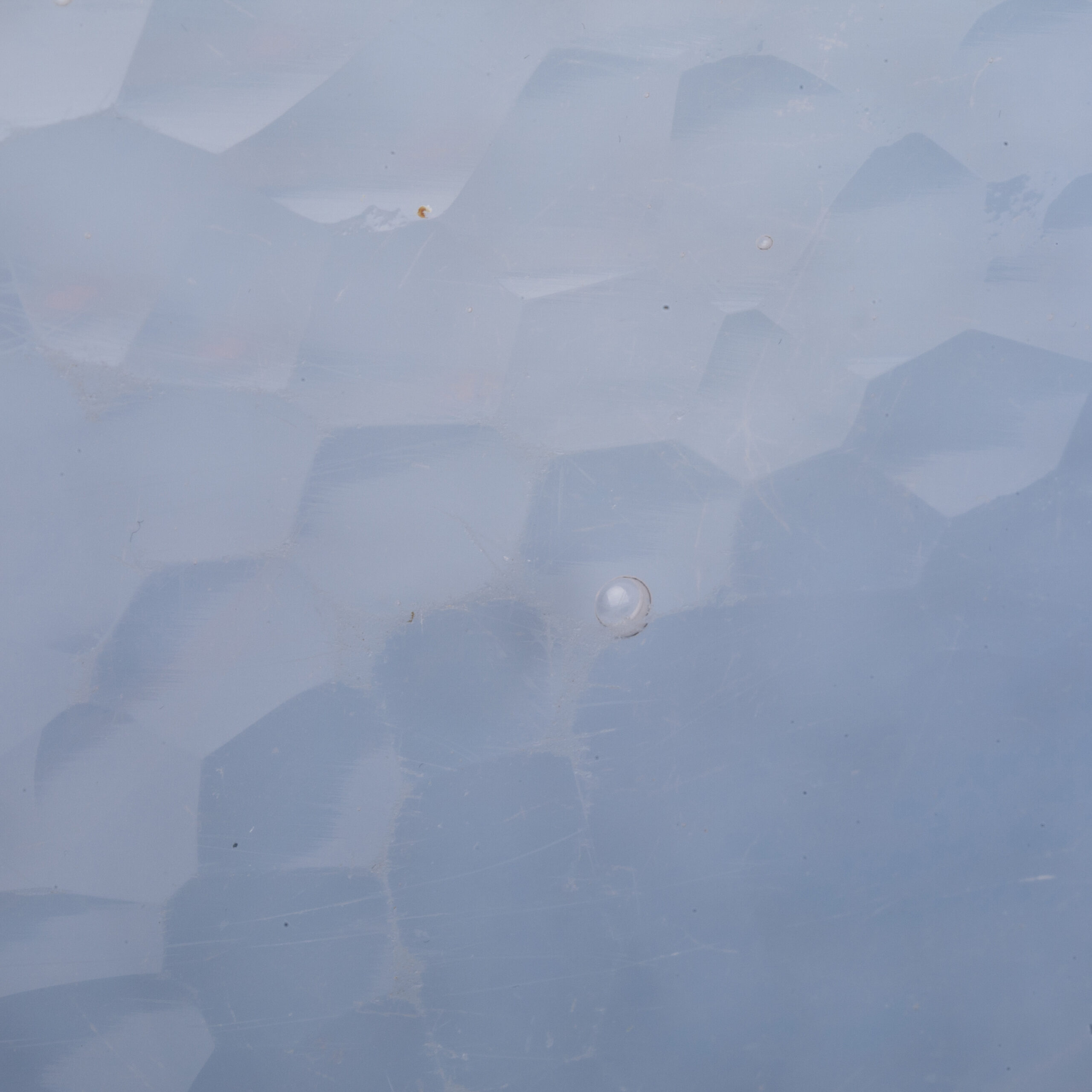
Age-related wear, surface scratches and some rubbing to the gilding, particularly along the upper rim. Small bubbles and inclusions are visible within the glass. Condition is shown in the photographs.